
 Summer birding can be somewhat unproductive, but that doesn’t mean you should stay home in front of the air conditioning. So what if the birds are busy nesting and raising young? Birds aren’t the only attraction in the great outdoors.
I recently took part in a field trip led by several naturalists. Among them, they had combined expertise in birds, butterflies, and blooms. What a great combination. When the birds were busy, we turned our binoculars on the colorful butterflies fluttering around us. When the butterflies were scarce, we focused on the drifts of wildflowers along the trail. With so many fascinating subjects to examine, there wasn’t a dull moment to be had.
 Vast open spaces, blooming yucca, and constant wind were our companions on a recent hike to Corral Bluffs, an area under consideration as a new El Paso county park.
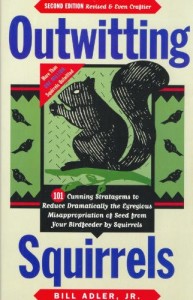
 If you feed them, they will come. Anyone who puts sunflower seeds into a birdfeeder sooner or later has to contend with squirrels. And if you grow a garden—well, squirrels like many of the same foods we do, plus flowers, tulip bulbs, and numerous other plants. The question isn’t whether or not you’ll have squirrels in your yard. You will. The question is, what are you going to do about them?
 Last summer we took a drive to Granby, just outside of Rocky Mountain National Park. While I had heard about the Mountain Pine Beetle for years, I was unprepared for the extent of the devastation. Entire mountainsides were covered in dead and dying pines, eerily resembling New England’s beautiful red fall foliage. But rather than deciduous maples and other hardwoods, these were conifers, largely ponderosas. They wouldn’t be turning green again come spring.
 While we’re still shoveling snow and scraping windshields, bluebirds are thinking about spring. Colorado has three species of bluebirds, Eastern, Western (seen here) and Mountain, and all of them are what birders call “early nesters.”
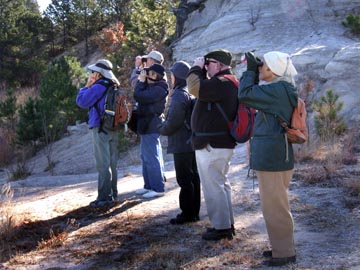 Our recent warm spell is lovely, but it’s still January. Temperatures swing back and forth between cool and freezing. Trails are icy, and sometimes blocked by snow. This is traditionally a time to hole up and hunker down. We are attracted to warm firesides, hot chocolate, and snugly quilts. But if you, like me, are passionate about nature, and birds in particular, can we be content to sit by the fire? Just because the temperature outside is in the single digits, are we to ignore our obsession and hibernate like bears?

 Mountain Plover