
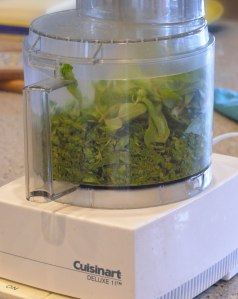
 The summer is winding down and my harvest (well, except for the still-green tomatoes) is in full swing. Last month I made my first basil cuttings. Now it’s time for another one. And with any luck (and a late frost), I’ll reap one more before the plants freeze.
How do I get so much basil from just a few plants? It’s not hard—I just have to plan ahead. First, I start the plants early indoors. Second, when I pick the leaves, I make very intentional cuts in specific places. And finally, I don’t let the plants go to seed. Let’s look at each of these points more closely.


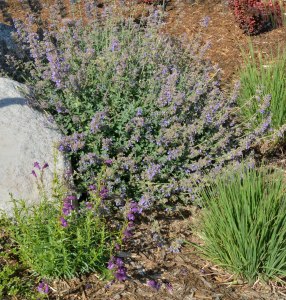 You’ve read the instructions; I’ve used them frequently here in my posts. “Drought resistant once established.” Sounds good—we’re always trying to save water—but how should you water these plants to start with? And what does “established” mean?
 Your carrots have finally reached harvestable size—you can tell from the broad shoulders slightly protruding from the soil that the crop is going to exceed expectations. Excitedly, you bend down and gently tug on the feathery green leaves. Pop! Up come the leaves and the top of a carrot—but wait! Where’s the rest? All you’re holding is a quarter inch of orange. The rest of the carrot is missing! Confused, you stick your shovel into the soil to bring up the next root, but it suddenly plunges downward, encountering no resistance. There’s a tunnel under your carrot bed. Grrrrr!
 Envision a woodland garden, and nodding columbine are one of the first plants that comes to mind. With their intricate shapes and rainbow of colors, columbines are deservedly popular perennials.
 It sounds too good to be true. Not only are marigolds pretty, but growing in your vegetable garden will protect your harvest from nematodes, beetles, hornworms, whiteflies, squash bugs, thrips, hornworms, and even rabbits. I know it must be so, because I read it on the internet:
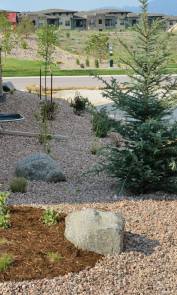 In the year we’ve lived in our new house, the first on the block, we’ve gained a number of neighbors. Now that the growing season is officially underway, these new yards are being landscaped. And I’m reminded all over again of why, back in 2000, I signed up to become a master gardener.
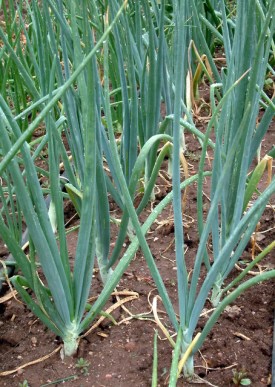 Do you grow onions? They’re not the most popular crop for the home veggie garden, which is a shame because they’re incredibly easy to grow. Sure, you can go to the store and buy a bag for a pittance, but that’s true for most vegetables we grow. And the flavor of home-grown onions isn’t that different from the ones at the market. The primary advantage of growing your own onions is that you know exactly what you sprayed them with—or didn’t.
 The scarlet blossoms really do look like bushy paintbrushes dipped in red paint; they’re hard to miss, even in a meadow crowded with wildflowers. Most of us easily identify these iconic perennials, although we may be a bit confused by the species that bloom in pink, white, and yellow.
 Mountain Plover