Cultivating Spiders

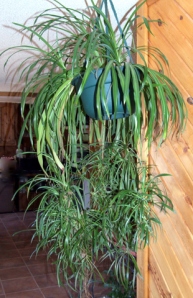
spider-plant-home-28mar2006-lah-123rHalloween is just around the corner. Spider decorations are everywhere. I don’t like spiders much (rather, I’m terrified of them), but even arachnophobes like me aren’t afraid of spider plants. There are no chitinous appendages, poison glands, and no skittering noises. Instead, they just grow like crazy and produce lots of offshoots.

It’s easy to see where the name comes from. All those strap-like leaves resemble spider legs (thankfully they aren’t hairy!), and the babies hang from stems in the same way that spiders dangle from silken threads. I wish all spiders could look this cute.


(more…)

Garden Whimsy

Today is the 5th Thursday of the month, so it’s time for a break. I thought I’d post some fun garden photos I’ve taken over the last few years. No one ever said you had to be serious in your garden! I hope these put a smile on your face, and perhaps inspire you to create your own unique garden feature.

fashionable-gardening-shoes-carnegielib-16apr07-lah-754

To start with, how about some ladybug garden clogs? These are so cute, I’d hate to get mud on them! One of our Colorado master gardeners was wearing these.

(more…)

Trumpet Vine – Campsis radicans

campsis-radicans-trumpet-vine_xg_090720_lah_7324Appearance
Tropical vines with huge, brilliantly colored flowers don’t normally grow in Colorado, but Trumpet Vine is an enjoyable exception. A vigorous grower, Trumpet Vine can reach 30 feet, with dark green compound leaves that drop in fall to reveal the vine’s light brown papery bark. From mid-summer to frost, three-inch long vase-shaped flowers of fiery orange-red grow in clusters of four or more. In fall, hundreds of papery seeds develop in five-inch long capsules.

(more…)

Cupid’s Dart (Catananche caerulea)

catananche-caerulea-cupids-dart-xg-9aug05-lah-262rDescription

Cupid’s Dart comes to Colorado from Europe, where its historical role as an ingredient in love potions gave rise to its common name. Clumps of slender gray-green leaves grow about a foot tall and wide. Wiry stalks extend past the foliage, supporting a myriad of striking periwinkle-blue flower heads, each set off by papery bracts behind the petals. If left to mature, the two inch blooms turn into attractive seed heads that last all winter.

(more…)

Locoweeds

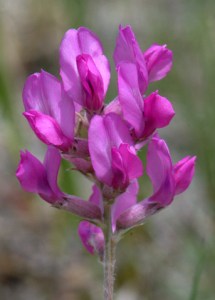
oxytropis-lambertii_locoweed_kcs-co_lah_3438nefI was hiking on a nearby ranch last week when we came across some spectacular wildflowers. As I knelt to grab some photos, my plant expert companion remarked, “You know that’s locoweed. We should pull it out!”
What? Destroy these beauties? Why? I was about to receive an education.

Locoweed (or crazyweed) is the common name for two genera of western plants, Oxytropis (left) and Astragalus (also called milkvetch), both in the pea family, and both including some species that contain the toxin swainsonine. Swainsonine interferes with protein metabolism and causes nerve damage.

(more…)

Foxglove ‘Spanish Peaks’

 (Digitalis thapsi)

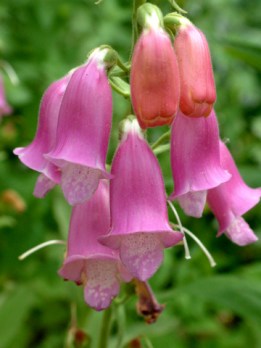
digitalis-thapsi-spanish-peaks-dbg-lah-002rWith one- to two-foot spikes of raspberry-pink flowers over a tidy mat of fuzzy foliage, perennial foxglove ‘Spanish Peaks’ isn’t your typical foxglove. Instead of the cool humidity of the British Isles, this hybrid is specifically recommended for Colorado gardens, doing well in our arid and unpredictable climate. As a result, it was named a Plant Select winner in 1999. The cultivar’s name reflects both the plant’s Spanish origins, and it’s suitability to Colorado, home of the Spanish Peaks.

Although attractive to bees and hummingbirds, ‘Spanish Peaks’ is usually disliked by rabbits and deer—probably due to its poisonous foliage. (The drug digitalis comes from plants in this genus.)

(more…)

Forget-me-not (Myosotis sylvatica)

myosotis-forget-me-not-dbg-lah-011rAppearance
The petite, sky-blue flowers of forget-me-nots have charmed gardeners for ages. Also available in delicate pink or white, the blossoms are suspended by wiry stems above crinkled, heart-shaped leaves of forest green. The plants form a groundcover six to twelve inches high and two feet wide. Even though the species is native to Europe, it has naturalized in North America to the extent that the Forget-me-not is the state flower of Alaska.

(more…)

Crown of Thorns

euphorbia-splendens_crown-of-thorns_blkforest_lah_6087Tomorrow is Good Friday, the day Jesus wore a crown of thorns.  In visualizing that painful headpiece, it helps me to think about the sharp spikes on the plant with the same name.

As the scientific name indicates, Euphorbia Milii is first cousin to other Euphorbias, including poinsettias, the wide variety of spurges, and Snow on the Mountain. All these species share common characteristics such as inconspicuous flowers surrounded by showy bracts, and a toxic, thick, milky sap. This latex can not only cause skin irritation, but if it comes in contact with a mucous membrane, extremely painful inflammation can result. Some species’ sap is even carcinogenic.

(more…)

Annuals You Can Plant Now

Warmer days flirt with gardeners anxious to get outside and plant something, anything. But the harsh reality of cold nights, coupled with the persistent chance of frost—or even more snow—intrudes on our dreams of summer. It’s far too soon to be trusting Mother Nature with frost tender petunias, geraniums, or marigolds, but there are some annuals that can handle a bit of cold. Don’t expect them to survive wintry extremes, but they should still be alive and flourishing after lows in the 20s.

Pansies

viola-x-wittrockiana_pansies_dbg_20100417_lah_2623Annual members of the violet family, pansies are much hardier than they look. Hot and sunny summer days will fry them to a crisp, so now is the time to enjoy them. Pansies prefer enriched soil, and will do fine in full sun or light shade, as long as the weather stays cool. They are slow to start from seed, so buy transplants. Their small size makes them perfect for edging, or group them in containers where they won’t be overlooked. With colors ranging from deep purple and burgundy to pastel pinks, soft peach, and cheerful yellow and white, you can find just the right cultivar to fit any landscape scheme.

(more…)