Brooms for Colorado

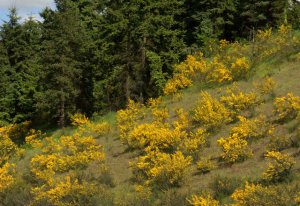
Cytisus scoparius_Scotch Broom_invasive_Tacoma-WA_LAH_0848I’m thinking of planting broom. Yes, one of those small, shrubs with the yellow pea-like flowers. Before you shudder and call me crazy, realize that invasive Scotch Broom (Cytisus scoparius, right) isn’t the only broom in cultivation, and the characteristics that led gardeners to import brooms in the first place are shared by many other species, some of which are hardy enough to survive drought, hot sun, and cold winters.

(more…)

Perennial Sunflowers

Helianthus maximiliani - Maximilian sunflower_DBG_20090915_LAH_0606

It’s January, but my brain is in July. I need to imagine warm breezes, green leaves, and most of all, bright flowers. And what is more reminiscent of a hot, summer day than a bright yellow sunflower? When we think of sunflowers, the image that comes to mind is a large brown disk surrounded by brilliant, sunny petals, kind of like this: (more…)

PlantSelect® is for Colorado

Last week’s garden post was devoted to All America Selections, a nation-wide program that highlights new cultivars most likely to succeed in your garden, no matter which part of the country you live in. Surprisingly, it seems to work for Colorado. But there’s an even better “seal of approval” for Colorado gardeners to look for, at least when it comes to shrubs and perennials: PlantSelect®.

(more…)

All-America Selections

Tithonia_Mexican Sunflower_DBG_LAH_7143-001As the seed catalogs pile up on my nightstand, the choices become overwhelming. It’s hard enough to choose which flowers and veggies to grow this coming year. But then there are page after page of cultivars to choose from.

This isn’t a new problem. As is true today, the 1930s was a time when plant breeders were creating a lot of “improved” flower and vegetable cultivars. Were they really better than the old standards? With all the new choices, how could home gardeners know which were the best? (more…)

Ephedra in the Garden

Ephedra equisetina_Bluefir Jointstem_ColoSpgs-CO_LAH_5027

It’s only November, but when it comes to gardening in a cold weather climate, it may as well be winter. From the first sudden freeze, now months ago, the leaves have been brown. For those of us who have gardened in more mild conditions, we crave green, especially evergreen shrubs, but the choices are severely limited. There are the ubiquitous junipers and other dwarf conifers. Yuccas. Firethorn (Pyracantha). Perhaps some Oregon Grape Holly (Mahonia) if you have a sheltered spot so the leaves can avoid desiccation. Even my supposedly evergreen Cotoneaster is brown. But there’s one often-overlooked shrub that stays green all winter—even if it doesn’t exactly have noticeable leaves.

(more…)

Deadly? Or Delicious?

Devil’s Trumpet (Datura sp.)

Eating just a few leaves or berries will leave you writhing on the ground. Your mouth dries, your pupils enlarge, and you run a fever. Within minutes, you gasp as painful cramps turn into vomiting and diarrhea.  First your pulse races, then it slows, as does your breathing. Your head pounds, and then the hallucinations start. You’ve become paralyzed.

But soon, none of that matters any more—because you’ll be dead.

Happily, if you do manage to get to a hospital in time, there’s a good chance you’ll recover, although the symptoms can last up to three days. Eating an unidentified plant is never a good idea, but if it happens to be one of the more dangerous members of the nightshade family, it could be fatal. (more…)

Pretty Purslane?

Portulaca oleracea 'Toucan Fuchsia'_Purslane_DBG-CO_LAH_7226

What were those vibrant pink flowers? They were definitely show-stoppers, especially as they were spilling out of planters crammed full of flowers in other shades of pink plus various yellows—creamy white Cockscombs (Celosia cristata), pale pink, ruffled Cosmos and darker pink Globe Amaranth (Gomphrena), butterscotch-yellow Lantana, Petunias in either a lush purplish-pink or a pale cream with yellow throats, and finally, bright lemon Flowering Maple (Abutilon). Whoever had designed the display, situated along the walkway in front of the greenhouses at Denver Botanic Gardens, clearly had a good eye for shapes and colors. (more…)

Just the Facts, Please

Purslane_Tyndale garden-ColoSpgs-CO_LAH_2881

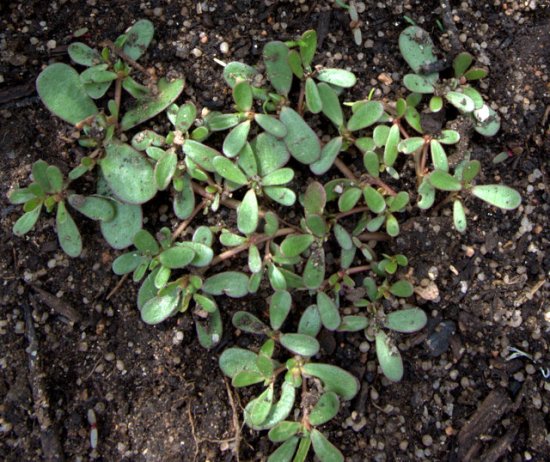
A few weeks ago, I wrote that I intended to verify claims that purslane (Portulaca oleracea) has “amazing health benefits.” I had read an article about this supposedly nutritional plant that seemed a little too good to be true. Being ever the skeptic, I dug in—and learned some things. I’ll use this as a case study on how to verify health claims that you read online. (more…)

Campanulaceae: Beautiful Bellflowers, Lovely Lobelia

Campanulaceae is a family of plants with members ranging from the towering palm-lobelias of Africa to cottage garden flowers with names from a child’s book of fairytales: Canterbury bells, Cup and Saucer Vine, Harebells, and Fairy’s Thimbles. Two familiar genera, Campanula and Lobelia, are members of this family.

(more…)

Hydrangea Heaven

Hydrangea_LakewoldGardens_Tacoma-WA_LAH_4511r

I just spent two weeks in the Pacific Northwest. Since our daughter and her family live there, we visit frequently, but typically at Thanksgiving or in mid-winter. This time we managed to arrive in July. What a treat! With blue skies, light breezes, and puffy white clouds, the weather was (mostly) perfect. All that rain during the fall, winter, and spring results in stunning summer gardens, with emerald green lawns and towering trees. And the flowers! Yes, the rhodies and azaleas were done, but the hydrangeas were in full bloom. Everywhere we looked, we saw huge flower clusters of bright pink, magenta, white, and most noticeably, pure sky blue.

(more…)