 Does this pink look too garish? Should I match it with orange—or cream? Or would the gray be better? One of my favorite aspects of gardening is coordinating flowers. Sure, each plant is a beauty all on its own but, just as a decorator pulls together matching and contrasting colors to produce a total look, so the creative gardener selects flower and leaf colors that complement one another, creating a composite whole that outshines any single plant.
The first summer in our new home, we simply added basic landscaping—retaining walls, trees, large shrubs, planters, and the lawn. Our yard was mostly mulch with little green dots scattered throughout. Think of a living room with the couch, a couple of chairs, and an end table or two, but no rug on the floor, pictures on the wall, pillows on the couch, or books on the coffee table. It looked pretty bare. (more…)


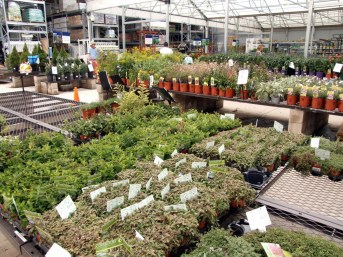 If the cooler weather and turning leaves haven’t alerted you, the calendar can’t lie. Tomorrow is the first day of autumn. Can our first frost be far behind? It’s tempting to let the change of seasons put a stop to gardening for the year, but there’s still much to do. (See my previous post on “
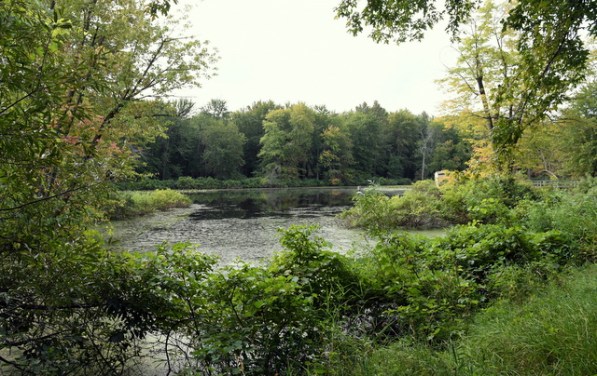
 We just returned from an intense two-week road trip to the Great Lakes. We visited thirteen states and one province and saw at least a glimpse of all five Great Lakes. You can see our route at right. It was a great trip. We took lots of photos, plus our drive across the prairies of North Dakota means that I’ve finally checked off my bucket list goal of visiting all 50 states!
 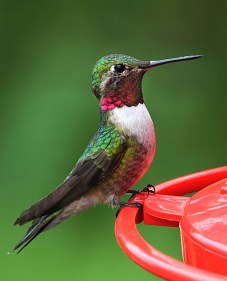 My yard is full of hummingbirds! Last summer I faithfully put out feeders full of sugar water, but had no takers. Not a single one. The only hummer that visited was a Broad-tailed Hummingbird that stopped by to check out the lone flower on a honeysuckle vine that was sitting in its can, waiting to be planted. But this year! From mid-July to late August, I probably had over a dozen in the yard at any one time—Broad-tailed, Rufous, and even several Calliope Hummingbirds that hung around for over a week. It was all I could do to keep my two feeders filled.
 I admit to feeling pretty good about my landscaping this year. I’ve been receiving compliments and relishing each and every one. All that hard work is paying off.
 Color. It’s probably the primary reason we grow flowers. Yellow daffodils and red roses, irises in every color of the rainbow. Without flowers, our yards would be much more subdued. Gardeners rejoice in the options available, but why do flowers come in so many colors in the first place? What do they get out of it?
 Every gardener knows that ladybugs are “good” bugs because they eat “bad” bugs. Educated gardeners know that ladybugs are actually beetles, and that they eat aphids, scale insects, immature beetles and true bugs, and mites. The adults are efficient predators; the larvae are even more voracious. No wonder we want lady beetles in our gardens!
 Mountain Plover