 The bulldozers are at it again. Another swath of short-grass prairie is being turned into houses. I can’t complain—I live in such a house. A mere three years ago, birds and bunnies made their home in what is now my yard. The voles and cottontails are still here and thriving, largely at the expense of my landscaping. The birds—assorted sparrows, hawks, Say’s Phoebes, Horned Larks, Scaled Quail, and Killdeer—decided to go elsewhere.
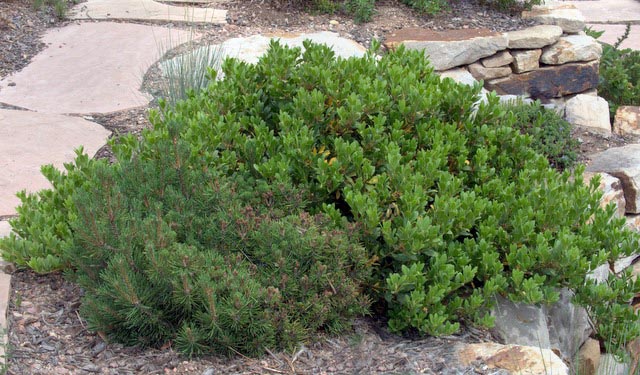
Now I’m trying to lure them back by replacing what nature has lost. Instead of the typical neighborhood rocks-and-grass “zero-scape,” we’ve included shrubs and trees that offer wildlife food and shelter. Native shrubs such as three-leaf sumac, manzanita, Boulder raspberry, buffaloberry, and chokecherry all offer berry-like fruit. Our roadside oak will one day provide acorns, the limber pines have seed-filled cones. Seeds come from native grasses and flowers, too, while dwarf conifers and dense shrubs offer a place to hide from predators and the weather. My nectar garden feeds hummingbirds and other pollinators. Feeders offer additional seeds and suet, and my heated birdbath is a year-round source of water.
(more…)

 It’s a common question. You’ve just planted a new tree. In the process, the plant has lost a significant portion of its roots—sometimes up to 95 per cent! Should you prune back the crown to compensate?
 Looking for a small perennial with a big impact? Consider Pineleaf Penstemon (Penstemon pinifolius). True to its common name, this low-growing plant has long, narrow leaves similar to pine needles. They hang on well into winter, and may be evergreen even in some colder climates. But it’s the flowers that steal the show. The dense mass of vivid scarlet red simply takes your breath away!
 As an enthusiastic gardener, I spend a lot of time in my yard, but it’s always a treat to visit other gardens. Just as sandwiches always taste better if I don’t have to make them, a garden I haven’t tended seems more lovely somehow. Perhaps it’s because I’m not responsible for pulling every weed; I can just relax and enjoy the flowers.
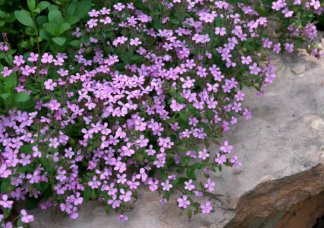 It’s such a pretty plant, petite and delicate, only a few inches high and covered with quarter-inch flowers of the softest pink. It’s the kind of groundcover perfectly suited for small spaces, rock gardens, and fairy bowers. It can even be used as a lawn substitute, as it tolerates limited foot traffic. With so much to recommend it, I’ve often wondered why this hardy perennial isn’t more popular. Perhaps it just needs a better name. “Soapwort” fails in the marketing department!
 Maybe hemlock has the right idea.
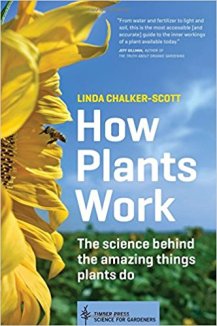 New gardening books seem to pop up as regularly as springtime dandelions. Most simply rehash what has been said before—perhaps with a new twist or better photos. But How Plants Work: The Science Behind the Amazing Things Plants Do (Science for Gardeners) isn’t your typical treatise on how to grow what. Instead, the author, Linda Chalker-Scott, explains the “why” behind the “how.”
 Mountain Plover