
 Here we are, down to the wire. Christmas is on Monday. Hopefully you’ve finished up all the “should do’s” and now have time to enjoy the “want to do’s”—spending time with loved ones, enjoying the neighborhood decorations, munching Christmas cookies and drinking hot chocolate, and contemplating the reason we celebrate in the first place.
However, if you’re still scrambling for gifts, I can help you with some suggestions for the birder and/or gardener in your life. All of these are last minute approved, and all should fit into the budget no matter how much you have left to spend.

 There has been a sudden flurry of articles and ads all promoting molasses as a valuable garden fertilizer/weed killer/pesticide. I find the latter use particularly humorous. Molasses is sweet. Won’t that attract critters? I bet our resident bunnies would adore molasses-coated shrubs.
 We had our first hard freeze over a month ago. Most of the deciduous plants and perennials in my yard are now dormant—some with dry brown leaves still attached, others with bare stems. But remarkably, not everything looks dead. In fact, a surprising number of plants still sport green foliage.


 Are you stressed? You should grow houseplants! Just ask all the experts. Try an online search and you’ll come up with almost two million sites claiming that growing plants reduces stress. Even the National Institute of Health has jumped on the bandwagon with a
 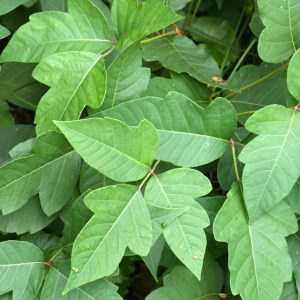 I was happily photographing wildflowers along the edge of a park in Ohio when our friend, a local, warned me, “Don’t touch that!” I looked down. That plant looked familiar—a sprawling, low-growing shrub with reddish stems and shiny green leaves, each comprised of three leaflets. Wasn’t that…?

 While we haven’t had a hard freeze yet, the lack of warm sunshine is telling my plants that the season is about over. Poppy seedheads act like salt shakers—just invert and shake out the seeds. We missed harvesting some pole beans and they’re now overripe, the pods puffy and enlarged. I’m letting them dry on the vine.
 Mountain Plover