My Favorite Varieties: Tomatoes

tomatoes-greenhouse-2008sept08-lah-296When it comes to the perfect tomato, we gardeners have sky-high expectations! We all have our own concept of tomato heaven—healthy plants bearing tons of huge fruit with exactly the right sugar-to-acid balance, thin skin (but one that doesn’t crack), early, full of flavor, and resistant to whatever Mother Nature can throw at it.

Here in my high altitude garden, I can’t afford to be so picky. Forget long-season heirlooms and humongous beefsteaks. I just want a tomato that will ripen before it freezes to death! It does, however, have to taste better than store-bought. Isn’t flavor the whole reason to grow tomatoes in the first place?
(more…)

Having a Row to Hoe

veggie-rows-dianapicchietti-monument-22july05-lah-025rEarth Day is this weekend, and what could be a more appropriate celebration than starting a vegetable garden. And for those of us in the Pikes Peak area, it’s finally time to get some dirt under our fingernails.

If this is your first year growing veggies, the first order of business is finding a promising spot for the garden. I talked about this in a previous post. Next, you need to decide how big to make the garden. This involves not only your desired yield, but also how you lay out the garden. Will you have traditional rows, wide rows (pictured here), beds (raised or otherwise) or a combination of these? Today I’m going to talk about rows… next Thursday I’ll cover beds.

(more…)

Another Easter Flower

pulsatilla-vulgaris_1972Can you name a plant that has short stems and showy purple flowers at this time of year? Now add eye-catching seed heads, and the fact that it’s native to Colorado (and other cold-winter areas in both North America and Europe). This cultivated wildflower is Pasque Flower (or), named after its Easter time bloom.

Appearance
Besides the lilac wildflowers, other purple shades are available in cultivated strains, from a deep purple-red to, rarely, white. Gray-green leaves appear after the flower buds, and may be more or less finely divided. They’re covered with silvery fuzz, giving a soft appearance that makes you want to pet them.

(more…)

My Favorite Varieties: Asian Greens

Most veggie gardeners grow lettuce, spinach, and perhaps chard, kale or collard greens. Some are familiar with bok choy (spelled a dozen different ways). It’s the adventurous gardeners, or those from overseas, who include veggies such as Mizuna, Salt Wort, Fun Jen, or  Yu Choi Sum.

Since we used to live in Cupertino, California, where my local grocery store was Tin Tin #2, and the closest restaurant served the most incredible mu shu pork and lettuce wrapped chicken, it was only natural that I included some Asian imports in my garden as well.

I admit to having western taste buds, so what I recommend might seem all wrong to someone used to more exotic flavors. However, I like what I like. Maybe you will too.

(more…)

Basket of Gold (Aurinia saxatilis)

Appearance
aurinia-saxatilis-basket-of-gold-dbg-lah-017Basket of Gold is a long-lived, low maintenance ground cover for small spaces. Gray, slightly fuzzy leaves are present year round, forming clumps 6 to 18 inches tall and 6 to 12 inches wide. In early Spring the plants are totally covered with masses of tiny cross-shaped flowers. Eye-catching colors range from soft yellow ‘Citrina’ or ‘Dudley Neville’ to the blindingly intense golden yellow of ‘Gold Dust.’ A similar species, Mountain Gold (Aurinia montanum) is more compact, with smaller leaves. Mountain Gold is also a bit harder to find at a garden center.

(more…)

Do I Need Some Fungi?

Amanita-type mycelia

I was thumbing through a gardening supplies catalog, looking at the assortment of “things you can spend your money on that your plants will probably do fine without” when my eye was caught by an offer for “mycorrhizae.” The catalog was extolling the many virtues of this fungal spore mix—it would improve plant health, make the plants more drought resistant, increase yields, protect against diseases, reduce the need for fertilizer, and cure my great-aunt’s bunions, all for $16.95 per pound.

It sounded too good to be true, so naturally I was highly skeptical. (It also sounded pretty expensive until I learned that you apply it by the teaspoon. Phew, not so pricey after all!)

(more…)

My Favorite Lettuce Varieties: Butterhead

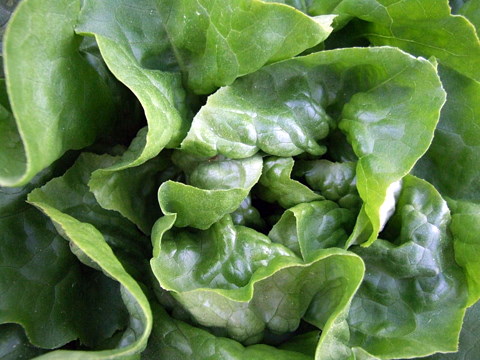
lettuce-butterhead-blkforestco-5junt07-lah-006Butterhead (aka bibb) lettuce, with its smooth, soft leaves and loose heads, is by far my favorite kind. It’s also rather pricey in the stores. I probably plant twice as much butterhead as I do all the other varieties combined.

I’ve been hunting for a butterhead that is big, holds for several weeks at maturity, resists tipburn (a problem with our hot, dry, windy weather), and is tender and flavorful—a pretty tall order. I finally came up with a winner, but let me first tell you about the also-rans.

(more…)

Scheduling Seed Starting

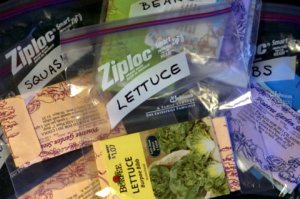
seeds-in-baggies_lah_6137If you ordered your seeds from a catalog, chances are those seed packets are beginning to arrive at your house—an entire garden, in one padded envelope! After you’ve opened the package and checked to make sure they included everything you ordered, (or if you’ve bought your seeds at your local garden center), what should you do with those seeds?
I used to just toss the packets into my seed-holding shoebox and hope I would remember to start them at the right time. Now I take a little time to get organized before spring planting really gets underway.

(more…)

CSU Veggie Trials

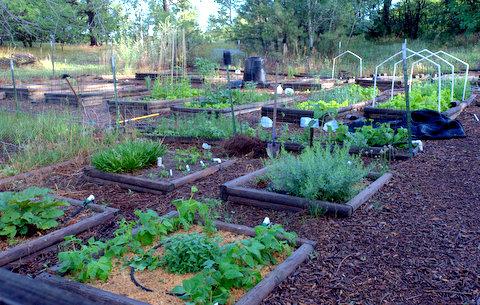
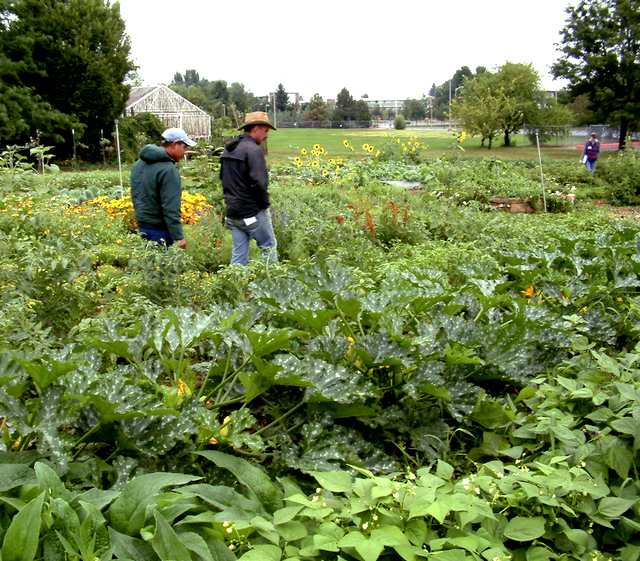
veggie-garden-student-run-csu-perc-lah-094-nx-1How many times do we read a description in a seed catalog, order the seeds, then find ourselves disappointed with the results? Our Colorado climate and soil conditions make for some challenging gardening, and varieties that thrive in other parts of the country just don’t do as well here.

Thankfully, we have a state university providing us with research-based information especially suited to our high and dry gardens. From 2004 through 2008, CSU trialed an assortment of potential commercial crops, comparing varieties to discover which, if any, do well here. The results are available on their website under the heading “The Rocky Mountain Small Organic Farm Project.”

(more…)