Last month I described a number of ways that salt can creep into our garden soil. Here are a couple more, plus what you can do about it.

Last month I described a number of ways that salt can creep into our garden soil. Here are a couple more, plus what you can do about it.

We have hands. Birds have beaks. Have you ever noticed how useful a beak is? While lacking our manual dexterity, birds have no problem securing their dinners and stuffing said meal down the gullets of their young. Beaks are used to manipulate objects and preen ragged feathers. Some birds use their beaks to impress potential mates, or to scare away intruders. Beaks can even be used as weapons. Have you ever tried to steal an egg from under an irritated hen?
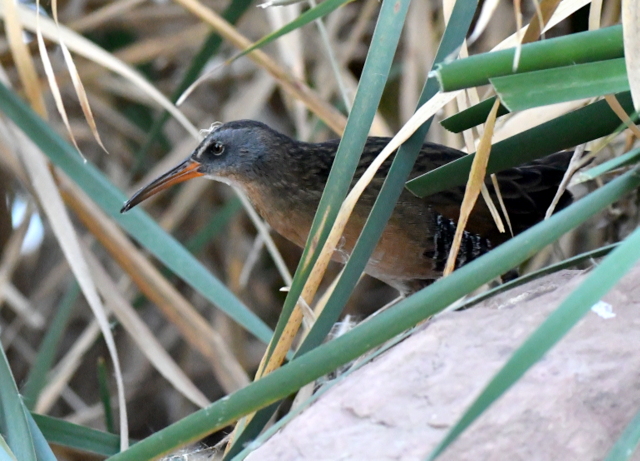
Beaks are also useful to birders, as their size, shape, and color are all helpful when it comes to identifying bird species. In fact, the more attention I pay to birds’ beaks, the better birder I become.
If you were stymied on Monday, now can you name this bird? The photo was taken in Florida last February. The answer will appear at the end of Monday’s post.


I did it again. Last spring, in a fit of gardening fervor brought on by the first flowers of the season, I put in an order for more spring bulbs, to be delivered in the fall. With my yard full of crocuses, glory of the snow, and miniature irises—and not much else—it was easy to see where those new bulbs should be planted.
Now it’s October, and I just received delivery. Yes, my box of bulbs arrived just ahead of our first snowstorm of the season. Now I have to plant them. Today.
What was I thinking?
This bird was photographed in Colorado in October. Can you name it? I will post the uncropped photo on Saturday, giving you one more chance to identify the bird. The answer will appear at the end of next Monday’s post.


What were those vibrant pink flowers? They were definitely show-stoppers, especially as they were spilling out of planters crammed full of flowers in other shades of pink plus various yellows—creamy white Cockscombs (Celosia cristata), pale pink, ruffled Cosmos and darker pink Globe Amaranth (Gomphrena), butterscotch-yellow Lantana, Petunias in either a lush purplish-pink or a pale cream with yellow throats, and finally, bright lemon Flowering Maple (Abutilon). Whoever had designed the display, situated along the walkway in front of the greenhouses at Denver Botanic Gardens, clearly had a good eye for shapes and colors. (more…)

I tend to visit botanic gardens by myself. It isn’t that I’m being unsociable—I’d love the company! It’s that I move at a pace that most find excruciatingly slow. I have been known to stop and examine every flower, every shrub, and, in this case, every leaf on every tree. And then, on top of that, I take photos. Hundreds of photos. Photos of the flowers, shrubs, trees, and yes, sometimes even the leaves. I can turn a two-hour garden visit into a 6-hour marathon. It drives most people crazy, hence my lack of companions.
But sometimes, that kind of close inspection pays off.

“Deadhead” can mean a number of things: a fan of the Grateful Dead, to complete a trip without paying passengers or freight, or an airline crewmember hitching a free ride on a plane so they can get to their assigned flight. If you’re a gardener, then deadheading means pinching off faded flowers.

It was a fruitful trip out to Chico Basin Ranch, east of Colorado Springs and Pueblo, and one of the best birding spots in the country. With fall migration in full swing, we ticked off well over 50 birds, including a Common Nighthawk, which I tend to miss as they match the branch they’re sitting on, and both Red-eyed and Blue-headed Vireos—good birds for Colorado. There’s nothing like birding with a very experienced guide, and John Drummond definitely qualifies. I learn so much when he leads a trip.
I’m still picking lots of veggies—tomatoes, eggplant, and peppers, squash, beans, chard, and herbs such as basil and parsley. Yet, fall starts in a few days and nights are already dipping into the 40s. That first frost can’t be far behind.
Here in Colorado, it’s now too late to plant most fall crops, as the short days and cold nights won’t let them mature before it snows. You can plant stiff-neck (hardy) garlic, however. Space the individual cloves about six inches apart and bury them about three-times their height. Spread a layer of mulch over the bed and relax. That’s one crop you won’t have to bother with later. (more…)