Do you love Easter egg hunts? How about Pokemon Go? Or perhaps you’re into geocaching. If any of these sounds like fun, then you might look into birding. It’s all these rolled into one, with time outside in the fresh air and sunshine, the thrill of discovery, and a bit of nerdy science thrown in for good measure. You never know what you’re going to find.
This past weekend, a friend and I revisited our local county park and nature center. We’ve both been there dozens of times, and pretty much know what to expect. I’d enjoy the morning just for the chance to take a walk in the riparian corridor along Fountain Creek, but it’s the added hope of discovery that makes every visit interesting. And now that migration has started, my anticipation is higher than ever.
(more…)


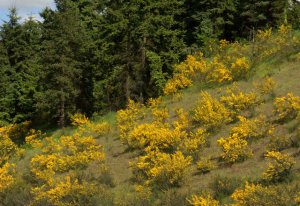 I’m thinking of planting broom. Yes, one of those small, shrubs with the yellow pea-like flowers. Before you shudder and call me crazy, realize that invasive Scotch Broom (Cytisus scoparius, right) isn’t the only broom in cultivation, and the characteristics that led gardeners to import brooms in the first place are shared by many other species, some of which are hardy enough to survive drought, hot sun, and cold winters.