
 In spite of this week’s blizzard, spring is almost here, and soon we’ll be seeing bright yellow flowers filling the lawn or growing in a crack in the sidewalk. Dandelions—you either love them or you hate them, but it’s hard to ignore them.
Thank You, Fellow Birders

There’s something about a bunch of birders (or do birders come in a flock?) all fixated on the same rare bird. The smiles, the lifer dances, the high fives and slaps on the back. We may be perfect strangers, but the shared excitement overcomes all barriers.
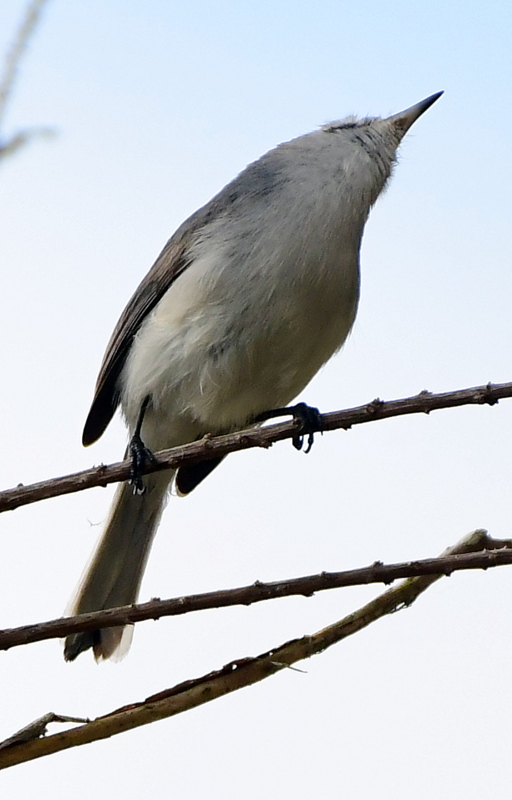
March Bird Quiz, Uncropped Photo
If you were stymied last Monday, now can you name this bird? This photo, showing the other side of the same bird, was taken in Florida. The answer, along with an even more helpful photo of the bird, will appear at the end of next Monday’s post.

Starting Seeds: Containers
I first posted this about ten years ago. Since my husband had unexpected bypass surgery today, I don’t have the time (or the concentration!) to write a new post. I hope you find this flashback to be a helpful reminder as we start our seeds for the upcoming growing season.

Raise your hand if you remember starting seeds in elementary school. Perhaps they sprouted in the cells of a cardboard egg carton. Sound familiar? Now, did your seedlings grow and thrive? Hmm, thought so. Granted, you probably forgot to water them, or you dropped the whole shebang on the way home from school. But it wasn’t all your fault. Egg cartons make awful seed starting containers.
What should you use to start those little seedlings? There are a number of excellent choices. Suitable containers share several attributes.
March Bird Quiz
Often, all we get to see is the underside of the bird. This bird was photographed in Florida last month. Can you name it? I will post another photo on Saturday, giving you one more chance. The answer will appear at the end of next Monday’s post.
Meet the Apiaceae
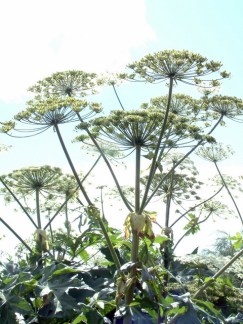 What do carrots, cilantro, celery, and poison hemlock have in common? Think like a botanist. How do the leaves look? What shape is the root? What about the flowers? Yes, they’re all members of the Apiaceae (aka Umbelliferae) family of plants. So are caraway, anise, parsley, parsnips, and a whole host of other familiar species.
Members of this family are relatively easy to distinguish. The most obvious feature is in the way their flowers are arranged—like an umbrella, with a stalk and a cluster of flowers on stems all springing from a central point.
Savannah NWR
 One of my favorite parts of any road trip is stopping at the national wildlife refuges along the route. In this case, we were heading from Columbia, South Carolina, where we’d visited family, to a vacation with friends on the east coast of Florida. And it just so happens that there is a series of refuges running from Pinckney Island NWR near Hilton Head Island, South Carolina, to Wolf Island NWR near Darien, Georgia. As we only had time to stop at one of those, we chose Savannah NWR, on the South Carolina – Georgia state line.
Turquoise Sunflowers, Fuchsia Daffodils?
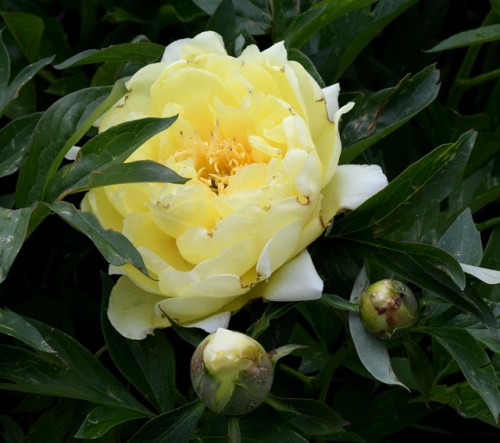
Why do we always seem to gravitate toward things that are rare? Precious stones, one-of-a-kind art objects, limited edition car models—we always seem to want most what’s hardest to find.
Gardeners aren’t exempt. We’re continually on the lookout for unique cultivars, with odd shapes or unusual colors. While lots of flowers are yellow, peonies usually come in shades of white, pink, and red. Yet, I have a good friend who paid a lot of money to get a yellow peony. Why? She thought it was “interesting.”
Florida Offers A Mid-winter Reprieve
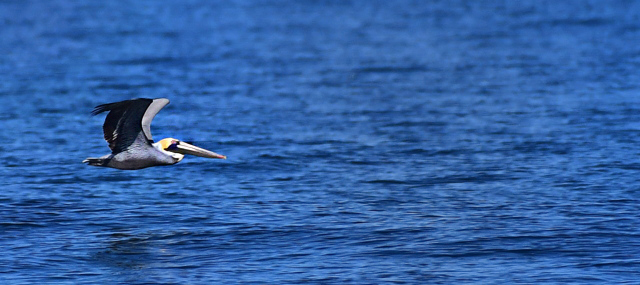
I admit it—sometimes I’m spoiled. It’s mid-winter here in Colorado, but we just returned from a road trip to Florida, courtesy of an invitation from some much-appreciated friends. Even on the coldest days, the beach was so much nicer than the snow arriving at home! (more…)
Flickers Come Bearing Valentines

In honor of this coming Thursday being Valentine’s Day, I decided to present you with some hearts, courtesy of the Northern Flicker.
I’ve long known that flickers are easily identified by their black bibs and spotted chests. But have you ever gotten a look at the feathers further down their bodies, such as on the side near the rear, or the rump just above the tail? It can be hard to see them, as they’re usually hidden by the position of the bird, or obscured by the folded wings.

