Can you identify these birds? The photo was taken during May in Puerto Rico. My answer will appear next Monday.
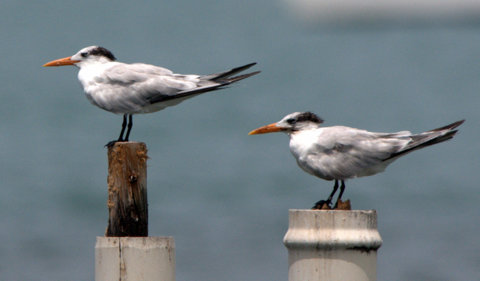

Can you identify these birds? The photo was taken during May in Puerto Rico. My answer will appear next Monday.
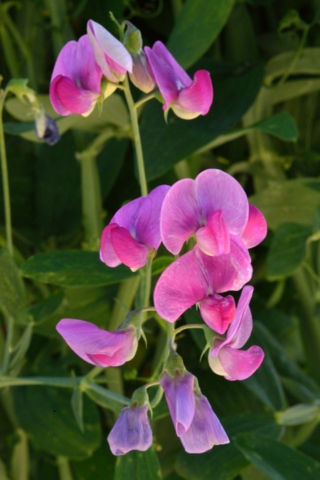 When you plant a seed with a child, you never know what will grow. I have a vivid memory of sowing sweet pea seeds with my mother; I must have been all of three or four years old. We dug a trench against our back fence. Then my chubby fingers placed each seed exactly in its place. I can still close my eyes and see the lavender, pink, and white seeds, coated to indicate what color the flowers would be. Then we covered them up and I patted the dirt smooth. In a few months we had armfuls of fragrant blossoms filling vases all over the house. Growing those sweet peas turned me into a life-long gardener, and to this day they are my favorite flower. (more…)
 Want some great birding in northern Utah? I recently discovered a real gem—the Bear River Migratory Bird Refuge. It’s located on the northeast corner of the Great Salt Lake, just northwest of Ogden off I-15/I-84. The day I visited—midweek in early April—I almost had the place to myself. It was just me and plenty of birds! (Don’t confuse this place with Bear Lake NWR, in Idaho, which is also well worth a visit.) (more…)
 Congratulations! We just survived one of the coldest winters in recent history. Spring has finally arrived, even here at 7,000 feet. Bulbs are blooming, trees are budding, and there’s a bit of green in the dead grass. As my perennials finally begin to sprout, I’ve been busy clearing off the dead stems and dried seed heads. One by one, they return to life, and I mentally take attendance. Catmint? Here! Blue Mist Spirea? Here! Ornamental Sage? Hello? Has anyone seen Sage lately?
Yes, some of my favorite plants are no-shows. Others, such as the Blue Mist Spirea, are producing leaves from the base of the plant, but the stems are still bare and lifeless. As I check on the woody plants in my garden, I notice that not all my shrubs are leafing out as expected. Should I cut them down? Dig them out? Or am I just too impatient? How can I tell if there’s still life left in those limbs? (more…)
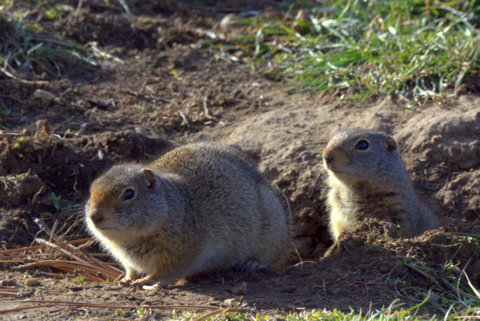 Chirp, chirp! Chirp, chirp, chirp! We had stopped to stretch our legs at a roadside rest near Ogden, Utah, so of course I pulled out my binoculars to look for birds. Walking the short path to a scenic overlook, I kept hearing this loud chirping, but I couldn’t find any birds I could ascribe it too. There were the usual American Robins, American Crows, and Black-billed Magpies—but none of those chirp.
There were also these adorable little ground squirrels. They would boldly emerge from their tunnels (reminiscent of prairie dog towns), obviously hoping for handouts, and… wait—were they chirping at me? They were! Guess I wasn’t going to find an exotic bird, but I did get some cute photos. (more…)
 In spite of the snowstorms this week, spring really is on its way. If you’re starting seeds indoors, it’s time to be sowing tomatoes, peppers, and other crops that take about eight weeks to reach transplant size. (Hold off on the cucumbers, squash, and melons—here in Colorado they should wait until early- to mid-May.)
Even if you’re waiting for warmer weather to plant, you may already have your seeds. Just think—that one little envelope might hold hundreds of zinnias or carrots, or thousands of zucchinis (at least)! How does something so innocent and seemingly lifeless turn into a magnificent flower or an overabundance of squash? How does that seed know to bide its time until it’s planted? What actually happens down there in the dirt?
To refresh your memory, here is the photo from April’s Bird Quiz. It was taken in Colorado during the month of May. Don’t read any further if you want one last chance to identify this bird.
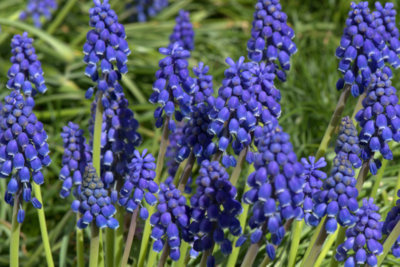 Thank heaven for spring bulbs! Just when I can’t bear another day of bleak winter landscape, leafless branches, dried and disintegrating foliage—along come neon-bright crocuses, dancing daffodils, and my favorite, luscious purple grape hyacinths. Not true hyacinths (which are borderline hardy in my 7,000 foot high garden), grape hyacinths are also sold under their genus Muscari. They’re native to southeastern Europe, and are widely cultivated for their early spring flowers in pink, purple, white, or a two-toned combination. (more…)
Can you identify this bird? The photo was taken in Colorado during the month of May. The answer will appear next week.


