
Here are three more cases where the standard gardening advice won’t do your plants any favors. (If you missed my previous posts on this topic, try typing “garden advice” into the search box at the top right of this page.)
 Vitamin B1 stimulates root growth. No, it doesn’t. A study done in the 1930s showed that when disembodied pea roots were placed in a petri dish saturated with vitamin B1 (thiamine), they grew. From this, they concluded that pouring a vitamin B1 solution over newly transplanted plants would help them get established. However, the plants in your garden are not detached pea roots, and they’re not growing in a petri dish. Further research has shown that adding B1 does nothing to help reduce transplant shock, but it will have an effect on your wallet. If you want to encourage roots, look for a product containing a rooting hormone instead.
 Your carrots have finally reached harvestable size—you can tell from the broad shoulders slightly protruding from the soil that the crop is going to exceed expectations. Excitedly, you bend down and gently tug on the feathery green leaves. Pop! Up come the leaves and the top of a carrot—but wait! Where’s the rest? All you’re holding is a quarter inch of orange. The rest of the carrot is missing! Confused, you stick your shovel into the soil to bring up the next root, but it suddenly plunges downward, encountering no resistance. There’s a tunnel under your carrot bed. Grrrrr!
 Do carrots really love tomatoes? Do beans and onions hate one another? The internet (and my bookshelf) is full of anecdotal advice about which crops we should plant together, and which ones we should not.
 As a gardener, I’ve often dreamed of living someplace where plants actually want to grow. Colorado is definitely not that place. The weather is wacky, we’re short on water, and the
 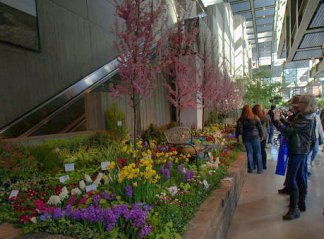 Sometimes I just need to see living plants. Colorado is wonderful; I love the mountains and grasslands, pines and wildflowers. I love the huge blue sky and even the menacing thunderstorms. But I do not care so much for the unending winters. While it doesn’t happen every year, we’ve had snow as early as September and as late as the end of May. That’s a really long cold season!
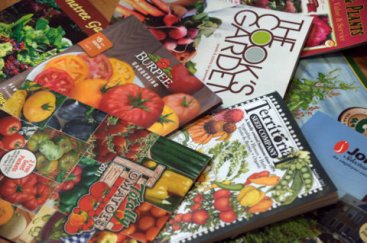 January. The start of a new year. The start of a new garden. As I contemplate my empty veggie beds, I feel like a race car driver waiting at the starting line. “Gentlemen (gentlewomen?), start your engines!”
 We have a lot of snow in our front yard. It may not seem like much to those who live in Minnesota, upstate New York, or Maine, but for us here along the Front Range of the Rockies, it’s a lot of snow. Colorado is dry. Colorado is sunny. We don’t get all that much snow, and what we do get melts the next day. The “real” snow is supposed to stay up on the ski slopes, not in our front yards.

 Mountain Plover