Making a List

LAH_0464I recently helped two long-time friends become birders. It was a thrill introducing two of my favorite people to a pastime I enjoy so much. We went birding and I offered ID tips. We discussed how to use binoculars, which field guides they might want to purchase, and some of the best places to look for birds. And inevitably, the topic of listing came up.

One friend really wasn’t all that interested in compiling a personal “life list,” but was eager to know what species were on her five acre property. The other friend has a small city lot, unlikely to attract much diversity, but was keen to keep track of the birds seen on our outings. That got me to thinking about all the different ways birders keep lists.

(more…)

Another Bird to See

Plain-backed_thrush,_Mishmi_Hills,_Arunachal_Pradesh,_IndiaWe interrupt this blog for an exciting, bird-related announcement. It seems incredible that an animal as large as a thrush could go unnoticed until now, but scientists have recently discovered a new species of thrush! It was separated from, and is similar to, the Plain-backed Thrush, shown here courtesy of Wikipedia.
The bird lives in the Himalayas of northeast India and the adjacent parts of China. As I haven’t been traveling to that part of the world lately (I haven’t even been out of the country in far too long!), I’m posting some links to a couple of the better articles I found on the discovery.

Conservation India has an very informative article. (To put this discovery into context, this article mentions that, “Since 2000, an average of five new species per year have been discovered globally, most of which are from South America.”  I had no idea!)

This article by Fox News includes the song, which is very pretty.


Starting Over

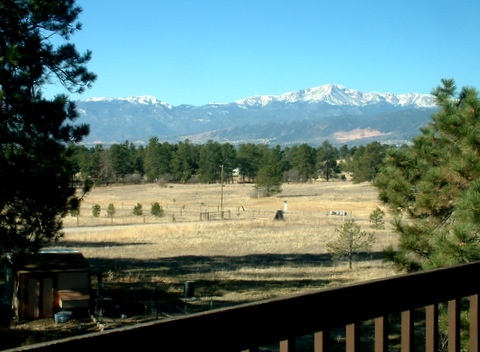
12175 Howells Rd viewI miss my birds. Until a month ago, we lived on almost five acres outside of town, with huge Ponderosa pine trees and a two-acre field. My yard list numbered over 60 species. I could stand at the kitchen window and watch three species of hummingbird at the feeder hanging from the eaves, and enjoy the antics of the Bluejays, Steller’s Jays, and Scrub Jays as they competed with the magpies for peanuts left on our balcony railing.

(more…)

A Checklist of Birders

Birders_ChicoBasinRanchCO_20100501_LAH_4259Just as there are different kinds of birds, there are different kinds of birders. What kind of birder are you? I’m sure that as you read through my list, you’ll be able to identify with one or these—or add another “species” that I haven’t thought of. And if you think I had you in mind when I made my list, well, perhaps I did!

The Merlin
Like a raptor on the hunt, this birder makes a beeline for where the action is. They expend a tremendous amount of energy while birding, but they’re always on the bird. They aren’t easily distracted. If someone points out a bird, they’re first on the scene, and all over it.

(more…)

Clean-shaven Irises

Iris hyb_XG-CO_LAH_6240Colorado gardeners are so familiar with Bearded Irises (Iris germanica) that we tend to forget there are any others. It’s true that Bearded Irises do exceptionally well in our climate and soils, but they won’t bloom for several more months. Two smaller relatives—Iris reticulata and Iris danfordia—are blooming now. Why not grow them as well?

Iris reticulata and I. danfordia are collectively known as Dwarf Irises. You may also see them labeled miniature irises or rock garden irises. Iris danfordia is a sunny yellow with brown specks; I. reticulata comes in shades of blue, purple, lavender, maroon, white, and yellow. It has bright yellow and/or white markings on the petals. This species has a number of named cultivars, including ‘Harmony’ (deep  cornflower blue) and ‘J.S. Dijt’  (very deep purple). All the photos on this page are I. reticulata. (Hybrid irises typically sold as “Dutch Iris” are larger, and bloom later in the summer.)

(more…)

It’s a Bird, It’s a Plane, It’s a Beer Bottle?

traffic-camera_colospgs-co_lah_2516-1“Look! A Prairie Falcon!”

Eva was jumping up and down, pointing at a medium-sized light blob on a near-by lightpost.

“Wow, what a great bird to start our day!” she enthused. We had just met up to go birding, and hadn’t even left the parking lot yet. I grabbed my binos and squinted harder at the blob.

(more…)

Avian Imports

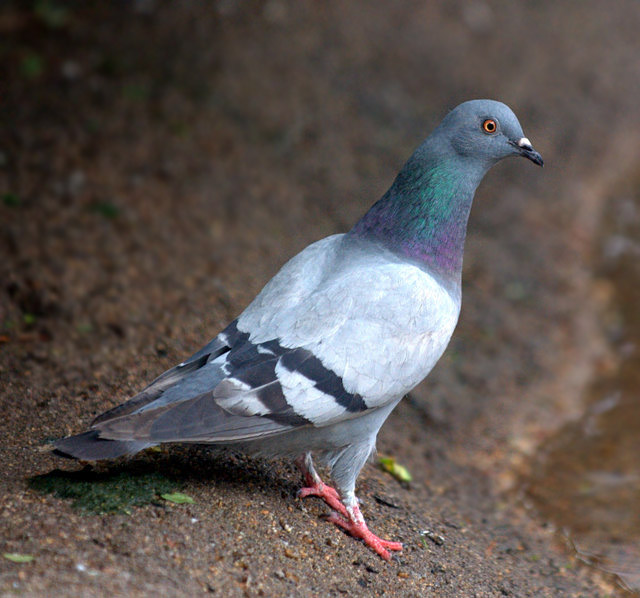
rock-pigeon_denverzoo_20090527_lah_1325When we think of non-native birds, the Big Three usually come to mind: Rock Pigeons, European Starlings, and House Sparrows. All three are major nuisances, threatening native species, eating our harvests, and causing millions of dollars in property damage every year. But these aren’t the only aliens among us. In fact, there are nearly one hundred imported bird species that have established breeding populations here in the United States.*

(more…)

And a partridge in a pear tree…

We’re all familiar with The Twelve Days of Christmas, maybe to the point where we don’t really listen to the words. Did you ever stop and realize that there are a lot of birds in that song? Think about it…

  • 7 swans a swimming
  • 6 geese a laying
  • 4 calling birds (probably originally “colly” birds)
  • 3 French hens
  • 2 turtle doves
  • and a partridge in a pear tree

According to Wikipedia, “Textual evidence indicates that the song was not English in origin, but French, though it is considered an English carol.” French or English, the birds are therefore European species, unfamiliar to Americans. Would we have wanted these birds as Christmas gifts?

(more…)