
 As my grandmother always said, “Horses sweat. Men perspire. Women glow.” How do we avoid this sticky situation? Kids run through sprinklers and adults head for the air conditioning, but what do the birds do when the thermometer climbs? They don’t sweat they can’t take advantage of the A/C. However, that doesn’t mean they just sit there and bake, either.
Because birds have relatively high body temperatures—a Golden Kinglet’s temperature was measured at 111° F!—it’s critical that they avoid getting too warm. Many essential proteins begin to break down at temperatures just a few degrees higher, so overheating could easily be fatal. Thankfully, birds have all sorts of ways of beating the heat.
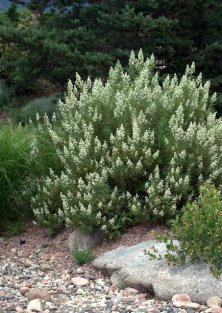 From a distance, a blooming fernbush (Chamaebatiaria millefolium) resembles a lovely white lilac bush, but no lilac would be in bloom at this time of year. Growing to seven feet high and wide, these shapely shrubs are covered in upright sprays of showy white flowers from June through August. Individual blossoms are reminiscent of single roses, and attract bees and butterflies. Come autumn, the flowers are replaced by russet seed heads.
 Most landscapes look terrific in May and June. The leaves are fresh and new. From pink crabapples to purple lilacs, it seems as if everything is in bloom. The contrast with the lifeless browns and grays of winter is enough to send you cavorting across the glowing, emerald green lawn.


 We’re in the middle of summer, that season I’ve waited for all year. All those December dreams of dahlias, March musings of marigolds—and now it’s too hot to go outside! A friend and I have been planning, then delaying, a trip to the Denver Botanic Gardens for several weeks, hoping for a cooler day that will allow for a more enjoyable visit and better photos. Meanwhile, what’s a sweaty flower lover to do?
 Spring migration is over, and the birds are all focused on mating and raising their families. The weather is too darn hot outside to be enjoyable, especially when one is hauling binos, field guide, water, scope with tripod, notebook, lunch, and possibly a camera. Then, to top things off, the sun is coming up at an hour when even birders would prefer to catch a few extra zzz’s. The early birds can have their worms.
 Mountain Plover