To refresh your memory, here is the photo from September’s Bird Quiz. The bird was seen in Colorado during the month of August. Don’t read any further if you want one last chance to identify this bird.


To refresh your memory, here is the photo from September’s Bird Quiz. The bird was seen in Colorado during the month of August. Don’t read any further if you want one last chance to identify this bird.
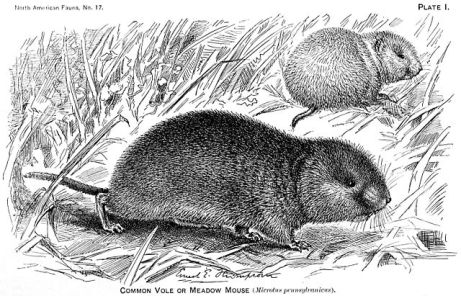
In last month’s post on “Who Ate My Plants?” I described the following scenario:
The heavy snowfall took a while to melt, but finally your dormant lawn emerges from under its frozen blanket. Last time you saw it, it was perfect turf, smooth and even. But now, it looks as if an army had performed maneuvers across your yard! Shallow furrows run here and there around islands of still-intact grass. What in the world?!
Can you identify this bird? The photo was taken in Colorado during the month of August. The answer will appear next week.
 In a field crowded with contenders, I have a new favorite wildflower. This plant is incredible—large, flashy, tough, gorgeous. What more could you want? Best of all, it’s thriving in my yard. I’m in love.
Most four o’clocks are sedate, old-fashioned garden flowers, something you’d see surrounding a cottage, combined with hollyhocks, old roses, and other grandmotherly plants. The Desert Four O’clock (Mirabilis multiflora) is like the grandma who dies her hair brilliant pink, wears short skirts with black fishnet stockings, and rides a Harley.
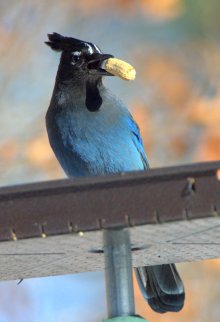 The birdfeeder had been up for weeks, but no birds came to dine. My friend was understandably frustrated. “Why won’t the birds come to my yard?” she asked. “I spent all this money on a feeder and birdseed, but they don’t seem to care!”
I thought about all the birds flocking around my assortment of feeders, and tried to see the differences. What was she doing—or not doing—that I was doing differently? We both lived in suburbia, amid rows of houses with lawns and trees and shrubs. In fact, we were only a few miles apart. So why did I have finches and doves and hummingbirds (and more), and she did not?
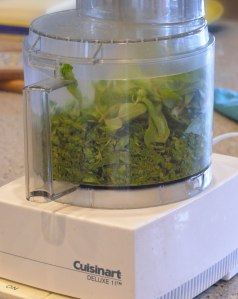 The summer is winding down and my harvest (well, except for the still-green tomatoes) is in full swing. Last month I made my first basil cuttings. Now it’s time for another one. And with any luck (and a late frost), I’ll reap one more before the plants freeze.
How do I get so much basil from just a few plants? It’s not hard—I just have to plan ahead. First, I start the plants early indoors. Second, when I pick the leaves, I make very intentional cuts in specific places. And finally, I don’t let the plants go to seed. Let’s look at each of these points more closely.
 With the high plains sizzling in 90+ degree heat, I was desperate to escape to somewhere cooler. Plus, I really wanted to see some birds. That’s why I headed to the hills—or, more accurately, mountains. There’s an advantage to living right next to the Rockies. In less than an hour, I was at 7,700 feet, surrounded by ponderosas, birding at Manitou Lake. A day-use area popular with the fishing crowd, this five acre lake is also a birding hotspot. You have to get there early, especially on weekends, but the abundance of wildlife is worth the extra effort.

The storm pounded our garden, flattening flowers and washing away gravel. Even with the damage, I was grateful for the water—we spent over $100 last month just irrigating our xeric landscaping. Water is expensive, but rain is free. If only there was some way to save the downpour flooding our garden. But wait—there is! We could install a rain barrel!
To refresh your memory, here is the photo from August’s Bird Quiz. The bird was seen in Colorado during the month of August. Don’t read any further if you want one last chance to identify this bird.

 They can swim both forward and backward.
 Mountain Plover