
 Who doesn’t like blue? With clouds of sky-blue, 5-petaled flowers that seem to float among the surrounding foliage, Blue Flax is a welcome addition to any garden. A perennial hardy to 9,500 feet, the fountain-shaped plants are comprised of graceful, wiry stems reaching two feet in height, and embellished with blue-green needle-like leaves.
Flax’s open, airy stems tend to go unnoticed, but the abundant true-blue flowers will fill those empty spaces between more vibrantly colored blooms in a perennial border. However, flax is most at home naturalized into a grassy meadow, where it can mingle with blue gramma grass and other short-grass prairie wildflowers.

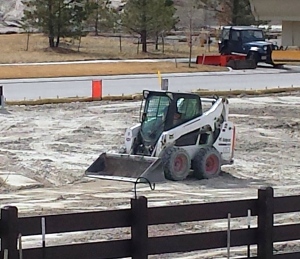 Last week I shared how to determine the make-up of your soil. This knowledge is helpful, but it doesn’t solve the problem of soil so hard, you can’t get a shovel into it. That’s what we’ll cover today.
 Ducks a few feet from my lens. Snow Geese, Canada (and Cackling?) Geese, Greater White-fronted Geese, all hanging out together. Beautiful weather. No crowds. And best of all, a new bird for my life list! The day I recently spent at the Sacramento National Wildlife Refuge complex was about as perfect as a bird photographer’s day can be.
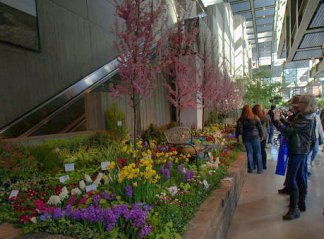 Sometimes I just need to see living plants. Colorado is wonderful; I love the mountains and grasslands, pines and wildflowers. I love the huge blue sky and even the menacing thunderstorms. But I do not care so much for the unending winters. While it doesn’t happen every year, we’ve had snow as early as September and as late as the end of May. That’s a really long cold season!
 I recently helped two long-time friends become birders. It was a thrill introducing two of my favorite people to a pastime I enjoy so much. We went birding and I offered ID tips. We discussed how to use binoculars, which field guides they might want to purchase, and some of the best places to look for birds. And inevitably, the topic of listing came up.
 Mountain Plover