A Murder of Crows

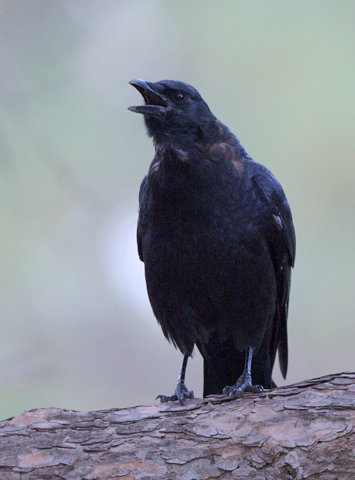
American Crow_PuebloCityPark-CO_LAH_8923I know a lot of people don’t like crows. There’s something sort of spooky about them. Maybe that’s because they’re black, and black birds seem to encourage superstition. Why else would a flock of crows be called a “murder”? It’s true that they’re not as colorful as most songbirds, and they do make pigs of themselves at feeders, but crows are fascinating. With Halloween fast approaching, this seems an appropriate time to take another look at these very common and highly intelligent birds.

You can learn all about the taxonomy and biology of crows from a variety of websites. I recommend The Cornell Lab of Ornithology, National Geographic, and Audubon for starters. It’s interesting information, but crows are more than a list of facts—much more. They are now considered one of the smartest animals in the world! Want proof?

(more…)

Quiz: Garden Jargon

Garden Bed?
A Garden Bed?

How well do you know your gardening terms? As with most groups of people with a specific hobby or occupation, those who garden have a specialized vocabulary—our garden jargon. We often use words that other people might not understand—or will they?

I have an interesting little quiz for you today. I’ve taken a series of gardening terms that have other meanings not related to gardening. For example, a bed can be a place we sleep—or a landscaped area, often filled with flowers.

I’ve picked ten such words plus an extra-tricky bonus word. They have a “normal” meaning, and also a specific, garden-related definition. I’ve given you the definitions that don’t pertain to plants. Can you come up with the garden-related word? Extra points if you know what it means in a garden context. The answers will appear Monday at the end of the article.

(more…)

A Checklist of Birders

Birders_ChicoBasinRanchCO_20100501_LAH_4259Just as there are different kinds of birds, there are different kinds of birders. What kind of birder are you? I’m sure that as you read through my list, you’ll be able to identify with one or these—or add another “species” that I haven’t thought of. And if you think I had you in mind when I made my list, well, perhaps I did!

The Merlin
Like a raptor on the hunt, this birder makes a beeline for where the action is. They expend a tremendous amount of energy while birding, but they’re always on the bird. They aren’t easily distracted. If someone points out a bird, they’re first on the scene, and all over it.

(more…)

Fabulous Fall Grasses

What do we plant for fall color? Most of us would quickly list off maples and crabapples, or perhaps a burning bush (aka winged euonymus). But what about grasses? Some ornamental grasses have impressive fall foliage, and it lasts all winter.

Ornamental grasses are everywhere. What was once a fairly obscure group of landscape plants have emerged into the spotlight, and their popularity shows no sign of fading. That’s not surprising, considering how much they have going for them—flowing leaves, towering seed heads, a fountain shape unlike that of shrubs or perennials that adds contrast and texture to the garden.

(more…)

Presenting Autumn, Starring Rabbitbrush!

Chrysothamnus nauseosus_Rabbitbrush_Cylindropuntia_Cholla_ChicoBasinRanch-CO_LAH_2989-001With intense sulfur-yellow flowers covering its gray-green foliage, blooming Rabbitbrush demands to be noticed. In fact, the prairies of eastern Colorado are almost blanketed with it—something we never notice until it blooms. Interspersed with prickly cholla cactus and some perennial range grasses, it forms the essence of western landscapes. But it’s not just for the wide open spaces. Rabbitbrush is an excellent performer in the garden as well.

(more…)

A Plant by Any Other Name…

Blue Columbine - Aquilegia caeruleaHow do you pronounce Gomphocarpus physocarpus? What is it? And how can we ever remember how to spell it? What’s Aquilegia caerulea? You might know it as Colorado’s native Blue Columbine (right). Or how about Symphyotrichum novae-angliae? Isn’t it simpler just to say New England Aster? Scientific names are enough to drive gardeners crazy, so why in the world do we need to bother with them?

Scientific names, also called Latin names, can be annoying, but they serve a valuable purpose. We owe a huge thank you to Carl von Linné, the Swedish biologist who, back in the 1700s, invented what we now call binomial nomenclature. He also had the bright idea to use Latin, or at least to Latinize the words from another language, in order to avoid giving preference to any nationality. Scientists all around the world use the same Latin name to designate a particular species.

(more…)

Fall Birding, Part 3

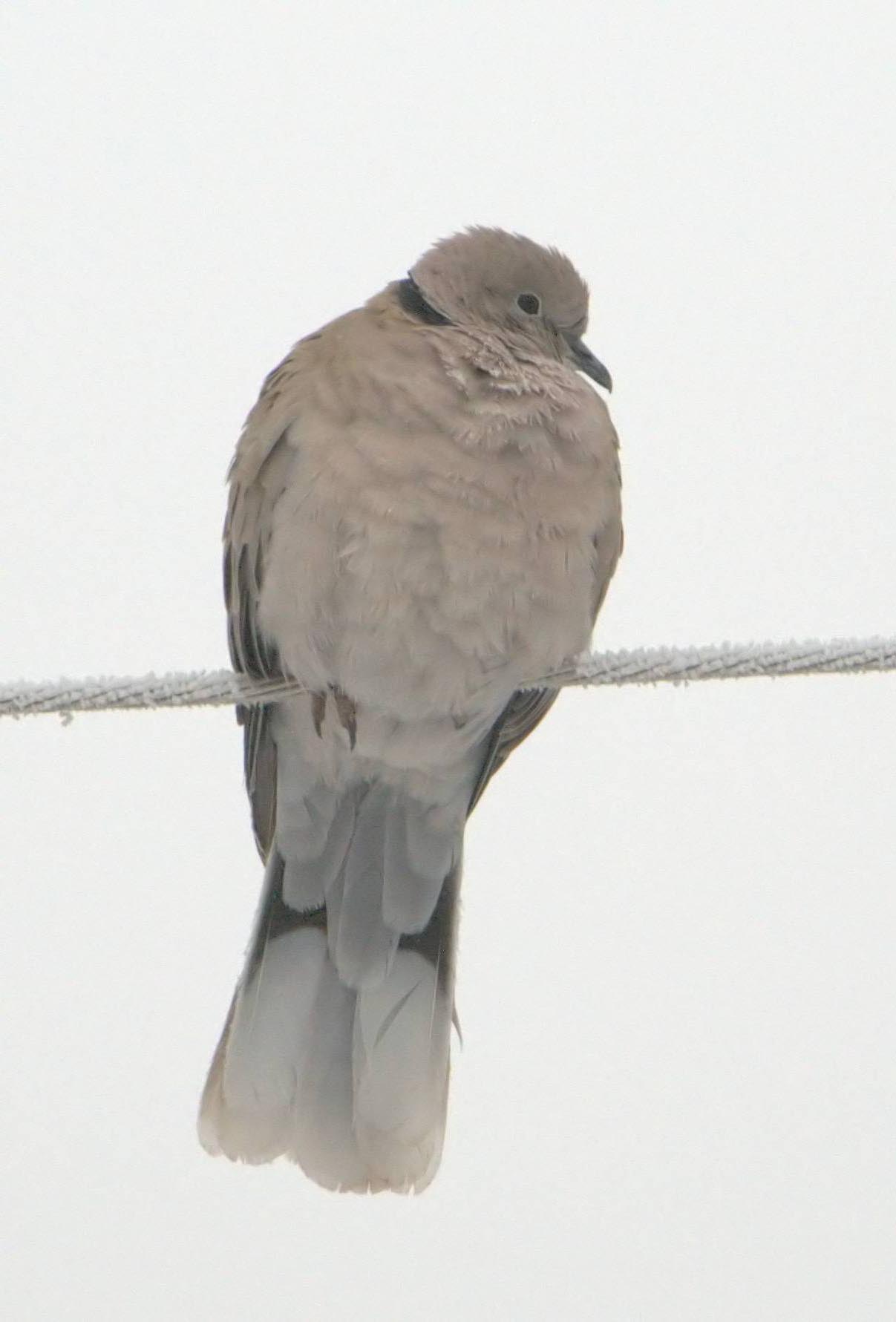
Eurasian Collared Dove-CO_LAH_2386_fLast Chance. It sounds as if it’s a small town in the middle of nowhere, and that’s about right. Situated at the intersection of Colorado Highways 71 and 36 (the same road that goes to Boulder, some hundred miles to the west) we found several houses, a fire station, and a church, along with some abandoned buildings piled with broken furniture and other castoffs.

The big draw is a small roadside rest (complete with portable “facilities”) right next to a small pond surrounded by green shrubs and some trees. It’s a birder’s dream. Surrounded as it is by miles of dry fields, the tiny riparian area at Last Chance is a migrant trap.

(more…)

Two Pestos You’ll Love

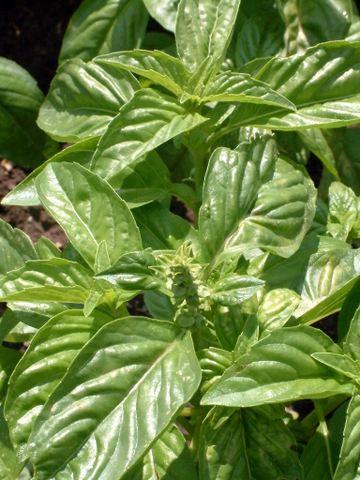
Basil @DBG LAH 175Summer is ending. For the past month, my potted basil plants have been doing their best to flower. I know that if I let them go to seed, they would die, so I’ve been pinching off the buds. However, now our nights are dipping into the 40s—too cold for these tropical annuals. Even if they don’t freeze, the chill turns the leaves black—not very appetizing. I’ve hauled the plants inside, but I can’t postpone the inevitable. It’s time to make pesto.

There’s no aroma quite like that of freshly made pesto, and that’s exactly what my kitchen smells like right now. I have two favorite pesto recipes, and I’d like to share them with you so your kitchen can smell this amazing too.

(more…)