To refresh your memory, here again are the photos for Bird Quiz #6. Read no further if you still want to have a shot at identifying these birds.

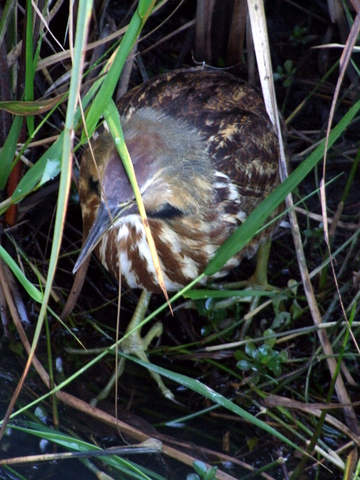

To refresh your memory, here again are the photos for Bird Quiz #6. Read no further if you still want to have a shot at identifying these birds.
(Make sure you also see the previous months’ Bird Quizzes!)
Can you identify these birds? The top photo was taken in Arizona in May. The bottom photo was taken in Florida in December. My answer will appear next Monday.


 My granddaughter, Willow, is only a month old, so it’s a bit too soon to be buying her binos and a field guide. Still, I’m looking forward to our first adventures outside, watching her joy as she discovers grass and flowers and ladybugs and, yes, birds. I hope she’ll be as fascinated with God’s creation as I am.
Since I hope to create a budding birder, I want to make sure I go about this in the right way. You can’t force a kid to love nature. So I’m already reading articles and talking to birding parents and grandparents about what works and what I should avoid.
To refresh your memory, here again are the photos for Bird Quiz #5. Read no further if you still want to have a shot at identifying these birds.
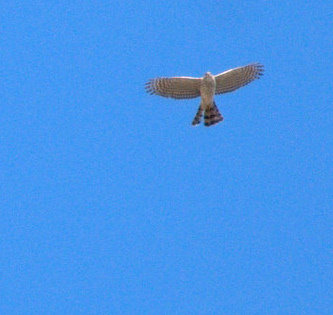

(more…)
(Make sure you also see the previous months’ Bird Quizzes!)
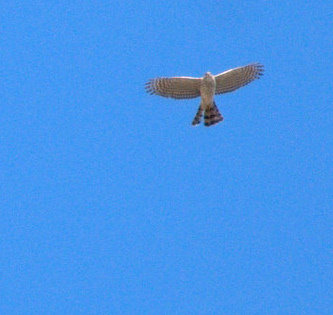
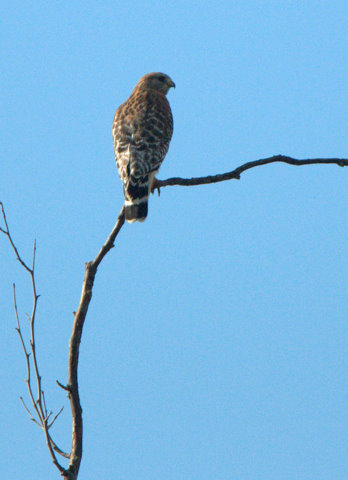
Can you identify these birds? The first photo was taken in Colorado in May. The second photo was taken in California in March. My answer will appear next Monday.
 “I’m interested in learning how to watch birds. How can I get started?”
The question was music to my ears. Who doesn’t love to share their passion with someone else? It wasn’t so long ago that I was a new birder, trying to juggle a crummy pair of old binoculars with a mysterious field guide, all while trying (unsuccessfully) to keep an eye on the bird I was trying to identify. I’ve come a ways since those early days and even though I still have much to learn, I’m eager to pass on my limited birding skills.
 It was like a bird-shaped ghost—we couldn’t quite believe our eyes. My friend Debbie and I were birding near Grand Junction, in Colorado National Monument—a spectacular place of sheer cliffs, rock pinnacles, and copper-colored sandstone.
We had stopped for lunch, and were alternately taking bites of our sandwiches and grabbing our binoculars. Blue-Gray Gnatcatchers, Rock Wrens, and Gray Vireos abounded. I was surprised to see Gambel’s Quail running under the junipers; I thought of them as living a bit more to the south. I was told that the species had been introduced to Western Colorado as a game bird.
 Right on schedule, I hear the shrill whistle of a Broad-tailed Hummingbird’s wings. I’m writing this on May 1, and I just had my first tiny visitor of the season—on the exact same date as last year. I’d hung the feeder a few days ago, just in case, but not one bird stopped by until today. Amazing.
I’ve had a feeder outside my kitchen window every summer for about eight years now. One year, May 1 brought a heavy snowfall, with temperatures in the 20s and the wind whistling about the eaves. Surely the birds were snuggled somewhere safe and warm, I thought. Maybe most birds were, but at least one Broad-tail braved the storm to get to my feeder. If the hummingbirds are that eager (desperate?) to have a sugar water snack, the least I can do is offer what they expect.
To refresh your memory, here again is the photo for Bird Quiz #4. Read no further if you still want to have a shot at identifying this bird.

As I mentioned in the quiz, I saw this bird near Grand Junction, Colorado, in May. Even a non-birder will probably recognize the flat face and upright posture as belonging to an owl. The real question is, which owl?
(Make sure you also see the previous months’ Bird Quizzes!)
Can you identify this bird? The photo was taken near Grand Junction, Colorado in May. My answer will appear next Monday.


