
 This is the hardest time of the year for me. After growing up in California, I’m used to spring starting about now. I want to get growing now—not wait for two or three extra months! So today, in defiance of Colorado’s climate, I’m going to give you some crocus growing tips. Take that, winter!
While the snow has mostly melted, even the recent warm temperatures haven’t been enough to thaw my soil. The perennial bed looks exactly how it did a month ago—brown and lifeless. However, by blogging friend Carey (at Carey Moonbeam), across town and a smidgen lower in elevation than I am, reports she has blooming crocuses in her yard!
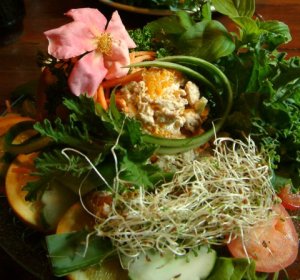 I love salads. Wash and tear some crisp, homegrown lettuce. Add a few sprouts, some mizuna leaves (mizuna grows exceptionally well in my garden) and other greens. Slice up some green onions, cucumbers and tomatoes, throw in a few flowers, and whisk together a light vinaigrette to pour over the top. Toss it all together, and yum!
 Does chaffing wind have you pining for gentle tropical breezes? Do the empty branches of your shrubs and trees leave you starving for bright green foliage? Are you dreaming of the scent of gardenias and orange blossoms?
 You don’t need to buy a plane ticket. Just head over the Denver Botanic Gardens’ new greenhouse complex. Walk through the door and your senses are engulfed by luxuriant growth. Feast on the bright colors and fascinating shapes of plants from faraway places. Inhale the humid air that keeps these exotics healthy and blooming. Pretend you are far, far south of Colorado.
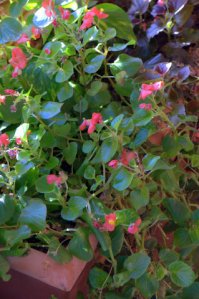 What plant thrives indoors, shrugs off low humidity, and blooms all winter in bold shades of white to pink to red? Surprise! It’s wax begonias!
 With giant, trumpet-shaped flowers facing outward around a central stalk, a blooming amaryllis makes an eye-catching houseplant. Colors range from white through pink to red (and even almost black), as well as salmon-orange. Stripes or contracting edges are common. “African” amaryllis have more compact forms suited to indoor cultivation. Dwarf amaryllis are smaller in size but can produce more blooms.

 The sky is bright blue, the sun is shining, the predicted high is well above freezing, and it’s been like that for months. Sounds like perfect weather—but not if you’re a plant. As I look out my window at my dormant garden, I can hear the plants crying for water. Everything is so dry! Desiccating winds have drained the last vestiges of moisture from exposed leaves and branches, and even the so-called evergreens are shriveled.
 Gardening in Colorado is not easy. Late freezes, early snow storms (though not this year), hail, drought, torrential rainfall, over 100 species of grasshoppers… there is plenty to complain about.
 Mountain Plover