
 Should you top a tree to keep it within bounds?
- Will a mulch of Ponderosa pine needles acidify the soil?
- Should you always add compost to a planting hole?
- What about encouraging native bees with a bee house?
A lot of what gets passed from gardener to gardener sounds like good advice, but has no benefit—or can even be harmful. Which practices are supported by research? Which should we forget about?
 The
The 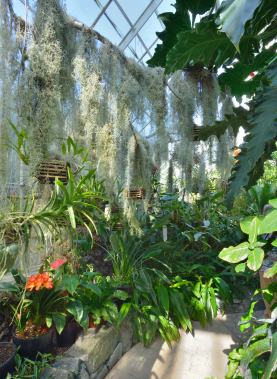 I love to visit Washington. The state is a gardener’s paradise. All those dreary days translate into brilliant azaleas and rhododendrons, ferny grottoes, and towering evergreens. The trick is enjoying those gorgeous gardens when it’s raining—and it rains a lot. Sure, you can visit in the summer, when days are sunny and the sky is a sapphire blue. But what about right now?
 What genus of flower is beloved by millions? Comes in every color of the rainbow (except green), plus black and white? Has species native to Hawaii—and the Andes? Can bloom through the snow in the dead of winter? Is tolerant of wet soil—or survives drought? Handles full sun or shade with equal enthusiasm? Includes annuals, biennials, and perennials? Always elicits a smile? Is the “birth flower” of February? The lowly Violas—which include pansies and violets—are all this and more.
 Type “baking soda garden” into your web browser and you get over a million hits. Not surprisingly, most are something along the lines of “17 Smart Baking Soda Tips,” and “7 Natural Uses for Baking Soda.” Depending on which list you read, it sweetens tomatoes, increases the blooms on geraniums, begonias, and hydrangeas, prevents black spot on roses, cures powdery mildew, discourages soil gnats, and kills slugs and other harmful insects “
 For an avid gardener, January can be a difficult time of year. Sure, we can dream. The seed catalogs that have been arriving for a month now are filled with post-it notes, dog-eared corners, and bright yellow highlights. At the same time, I’ve decided and re-decided (at least a dozen times) where I’m going to plant each seedling once the weather warms. I love the optimism of dreaming, but sometimes I just want to get my fingers into some soil—even if the “soil” came out of a bag of potting mix.
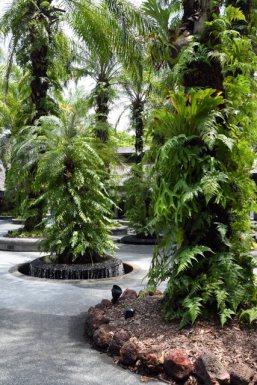 Last November I took you on a virtual tour of the Royal Botanic Garden in Sydney, Australia. Today we’re going to visit the Singapore Botanic Gardens. According to Wikipedia, “It is one of three gardens, and the only tropical garden, to be honored as a UNESCO World Heritage Site.” One visit, and it’s easy to see why.
 Just as each month is associated with a particular birthstone (January’s being a garnet), so is each month paired with a particular flower. According to folklore, each of these flowers symbolized specific characteristics, which were in turn assigned to those born during that month. While some claim this custom arose with the Roman empire, I suspect that the florist industry might also have had something to do with it.
 For many of us gardeners, poinsettia plants are an essential element of our Christmas decorating. I love the huge displays at church and in the stores, even if I don’t have room for that many in my home. I’ve written about how to keep the plants alive (see my 2012 post on “
 Mountain Plover