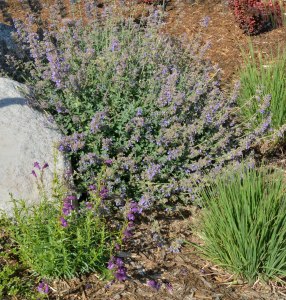
 You’ve read the instructions; I’ve used them frequently here in my posts. “Drought resistant once established.” Sounds good—we’re always trying to save water—but how should you water these plants to start with? And what does “established” mean?
There are a lot of misconceptions about xeric plants. Our landscaper (who was much better at dealing with hardscapes than with living plants) thought that our xeric shrubs and trees needed to be sopping wet for the first few years, until they were “established.” Dead, more likely. (I’m already having to replace some fernbushes that were growing in muck, and we lost the top half of our oak tree in the first few months.)
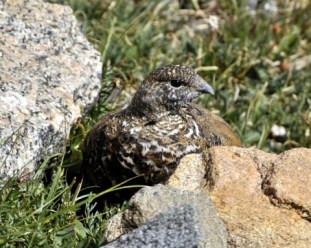 Last week I mentioned that we’d spent four days at Rocky Mountain National Park. One of the species all birders hope to see there is the White-tailed Ptarmigan. But unlike the Clark’s Nutcrackers, which happily pose at Rainbow Curve, ptarmigan are darned hard to find.
 Your carrots have finally reached harvestable size—you can tell from the broad shoulders slightly protruding from the soil that the crop is going to exceed expectations. Excitedly, you bend down and gently tug on the feathery green leaves. Pop! Up come the leaves and the top of a carrot—but wait! Where’s the rest? All you’re holding is a quarter inch of orange. The rest of the carrot is missing! Confused, you stick your shovel into the soil to bring up the next root, but it suddenly plunges downward, encountering no resistance. There’s a tunnel under your carrot bed. Grrrrr!
 Envision a woodland garden, and nodding columbine are one of the first plants that comes to mind. With their intricate shapes and rainbow of colors, columbines are deservedly popular perennials.
 It sounds too good to be true. Not only are marigolds pretty, but growing in your vegetable garden will protect your harvest from nematodes, beetles, hornworms, whiteflies, squash bugs, thrips, hornworms, and even rabbits. I know it must be so, because I read it on the internet: