
 Do you watch birds? And if so, are you a “lister”? That is, when you go out to look at birds, do you keep a list of which species you’ve seen?
While most of us start listing for our own sense of accomplishment (or compulsion!), those notebooks can actually help ornithologists determine where the birds live, whether their populations are thriving, stable, or in decline, and the human and environmental factors affecting them.
At the same time, we birders can benefit from one another’s sightings. Are you looking for a particular species to add to your life list? Did you know that you can find out where others have seen that bird?

 Once again, it’s time for Audubon’s
 This being Colorado, the weather is just a tad unpredictable. A few years ago we were dealing with temperatures that reached all of 6 degrees and heavy snowfall that created near-whiteout conditions. We kept expecting to encounter a penguin or two. This year the weather was lovely—sunny and relatively warm (with a high of 50 degrees). After our recent cold spell, it seemed almost tropical… so we weren’t too surprised to see a pair of flamingos, all decked out for the holidays.
 It’s the time of year we give gifts, and by now, we probably need all the help we can get in picking out just the right thing. If there is a gardener on your list who already has all the spades, gardening gloves, and yard ornaments they can ever use (or even if they don’t), I have the perfect suggestion.
 You have gifts for your parents and gifts for your kids. You have a gift for Aunt Claire and a gift for Uncle Bob. You even have a gift for your dog. But what about your chickens?
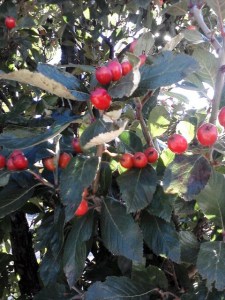 “Deck the balls with boughs of holly” might work well in Merry Olde England, or even in the eastern U.S., but it’s not very practical at my house, just north of Colorado Springs, Colorado. We have too much sunshine, the air and soil is too dry, and our soils are too lean and too alkaline. Holly won’t survive winter’s dessicating winds. At least, that’s what I learned when we moved here.
 Santa is making his list—what do birds want for Christmas? There are all sorts of recipes and projects that are meant for wild birds, but so often they’re actually meant to keep us birdwatchers entertained. No one asked the birds for their opinion.

