
 Last year, our son-in-law, Ian, fell when the ladder he was using collapsed out from under him. Given that his head had been more or less at the same level as the eaves of their single story house, it had accelerated to approximately 13 feet per second when it hit the cement patio. Unsurprisingly, the impact knocked him out. Thankfully, all he suffered was a severe concussion. It could have been much worse.
From our backyard, I have been watching a Northern Flicker make a hole in the mostly-dead oak tree next door. According to one website, the woodpecker’s beak is hitting that trunk at a significantly higher speed than Ian’s head was going when it hit the pavement—closer to 19 feet per second.

 “You can’t always get what you want…”
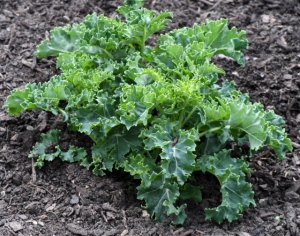 We were gone last fall, so I never got around to pulling out last summer’s freeze-killed veggies. It turns out that was a good thing. With no protection at all, my Starbor kale roots survived our Zone 4 winter, and new growth is appearing from a dead-looking stump. I expect the kale plants to bolt as soon as it warms up a bit more, but in the meantime, I’m harvesting kale now. I plan to include kale in my garden again this year, starting seeds inside and setting out plants in late June to mature in September and October, after frost sweetens the leaves. You can bet I’ll leave those plants in place next fall, maybe with a bit of mulch or a row cover, for yet another early harvest.
 When you think of container gardens, what comes to mind? Red geraniums in a window box? A hanging pot filled with colorful petunias? How about pots of herbs on the window sill? How about a huge pot overflowing with varied textures, colors, and shapes? When it comes to container gardens, that geranium is only the beginning.
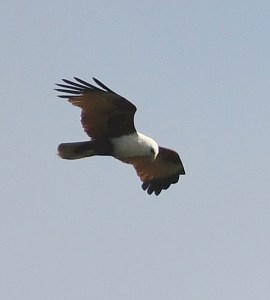 It was our final day on the coast of New South Wales, and I wanted to see shorebirds. We had stayed in Yamba, so after breakfast we headed for the beach. It was empty. No people. No birds. Just wind, and plenty of that.
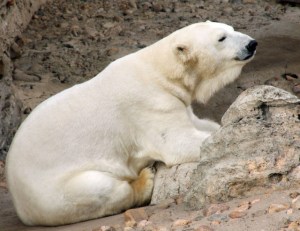 Save the monarchs. Save the rhinos. Save the polar bears. When I was growing up, it was save the whales. If you are on any conservation mailing lists, you know that there are plenty of beloved creatures in danger of extinction. Of course, these organizations all remind us that the way to save these poor, benighted creatures is to send money, lots of money.
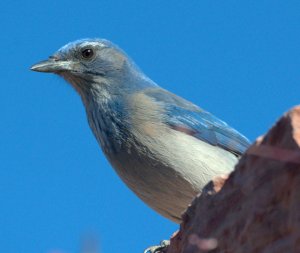 In case you haven’t heard, we have a new bird on the block. Last summer the familiar Western-Scrub Jay was split into two species—the California Scrub-Jay (Aphelocoma californica) and the Woodhouse’s Scrub-Jay (Aphelocoma woodhouseii).
 Mountain Plover