Growing Garlic

garlic-wikicommons-warzywa_czosnek002-1You may overlook the display at first, hidden among the photos of bright red tulips and sunny daffodils. Bulb planting season is here, and garden centers have towers of cardboard boxes labeled with spring blooms, somewhat incongruous at this time of year. Go ahead and pick out those hyacinths and crocuses, but don’t forget the garlic!

Sure, you can buy garlic at the market, but it’s one of those crops that is much better when home-grown. In this case, it’s not so much the just-harvested freshness as it is the variety. Most grocery stores do not sell the Good Stuff.

(more…)

I’m a Master Gardener Again!

After a year’s hiatus due to some major funding gaps, the Colorado State University Extension Master Gardener program is once again up and running in El Paso County. Yup, that means I can once again pin on my Master Gardener badge.

It also means that I’ll be volunteering again, putting in countless hours writing articles, taking photographs, teaching classes, and answering questions. It means our horticultural agent will be looking over my shoulder, making sure that my advice is solidly based on scientific research.  And it means that I’ll again have access to CSU Extension’s excellent continuing education opportunities, keeping me up-to-date on the latest developments in horticulture.

(more…)

A Gardener’s Guide to “Quantities”

A “few” bags of compost?

I was wasting time doing online research when I came across this delightful gardening blog. Clearly this post was written by a gardener, someone I can definitely relate to. The blogger identifies herself as “Carol,” an eccentric gardener, gardening geek, passionate about plants.

I thought Carol’s commentary on how gardeners count was too fun to keep to myself, so I’m sharing it here. Besides, this way I get to take a  break do more research for future articles. I hope you enjoy it as much as I did! And while you’re at her site, be sure to admire her extensive hoe collection.

May Dreams Gardens: A Gardener’s Guide to “Quantities”

An Oasis in Monument Park

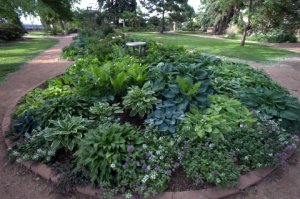
entrance_has-cospgsco_lah_0290A calm oasis in Monument Park, the Horticultural Art Society’s Demonstration Garden is the perfect summer retreat. Surrounded by mature trees that provide shade for much of the day, and full of flowers, it’s a place to linger and relax. Perennial borders encircle several planted islands, set off by a sea of green grass; the total effect is lovely.

hosta-bed_has-cospgsco_lah_0294As you enter off Mesa Road (a continuation of W. Cache la Poudre Street) or Glen Avenue in downtown Colorado Springs, the noise of the street fades, replaced by the chirping of birds and the gentle sigh of a cool breeze. Rarely are more than a few other people present.

(more…)

Sorting Out Sandpipers

semipalmated-sandpipers_chicobasinranchco_20100501_lah_4500Late August is one of my favorite times to go birding. Maybe that’s because I really like shorebirds. I grew up near the beach, and studied marine biology in college—and I still get excited about anything to do with the ocean. The shorebirds here in Colorado are nowhere near a coastline, but they’ll have to do, at least for now.
The calendar may still say summer, but shorebirds consider this time of year to be fall. They’ve finished nesting, and it’s time to head someplace where winters are warmer. Many species breed in the arctic, and Colorado is right on their route south.

(more…)

Mormon Crickets

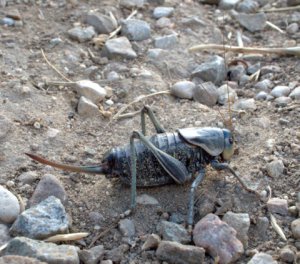
mormon-cricket_sinkscanyon_20090808_lah_8837“What is that huge, weird bug in the road? And what is it doing?”
We were hiking along a dirt track in Sinks Canyon, Wyoming (a totally gorgeous place, by the way), when we came across a large insect I didn’t recognize. I should have. A bit of research revealed that it was a Mormon Cricket (Anabrus simplex), and not only are they common, but at times they’re so abundant that their voracious appetites consume the landscape!

They do look sort of “cricket-y,” but Mormon crickets are actually shieldbacked katydids, also known as long-horned grasshoppers (family Tettigoniidae, subfamily Decticinae). They are found all over western North America, preferring sagebrush/grass rangeland similar to the place we found this one.

(more…)

Tumbling Seed Spreaders

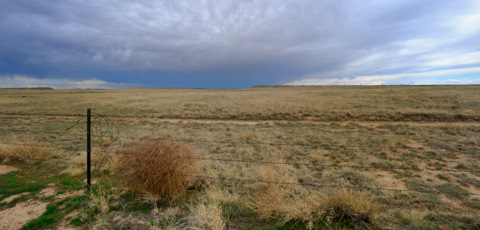
tumbleweed_commanchegrasslandsco_20100414_lah_2566

An iconic symbol of the West, tumbleweeds conjure images of cowboys, cattle drives, and barbed wire. They even have their own song—“Tumbling Tumbleweeds” was written by Bob Nolan in the 1930s, and seems to reappear as often as the weeds for which it’s named.

Yes, we’re all familiar with tumbleweeds. But, as a result of my Colorado Master Gardener training, I have insider information that will stun, shock, and astonish you. Tumbleweeds are aliens!

Yes, it’s true. Before the Europeans stumbled across the western hemisphere, there were no tumbleweeds on the plains. Of course, there were no cowboys, either—no horses, no cattle, and no chuckwagon bean dinners. Tumbleweeds arrived, not in flying saucers, but in seed shipments from Europe and Asia.

(more…)

California Fuchsia (Epilobium canum)

epilobium-california-fuschia_xg_090720_lah_7368Also known as Garrett’s Firechalice and Garrett’s California Fuchsia, Epilobium canum* is a spectacular plant for the fall garden, no matter what you call it. Flaming orange-red flowers from early July until frost make California Fuchsia a focal point in any xeric garden. Low-growing mounds of narrow, grey-green leaves spread two feet wide. The brilliant blossoms are a hummingbird magnet, giving them yet another common name, “Hummingbird Trumpet.” Plants look especially nice in front of contrasting companions such as dark junipers, purple asters, or silvery Artemisias.

(more…)

I Loved “Red-Tails in Love”

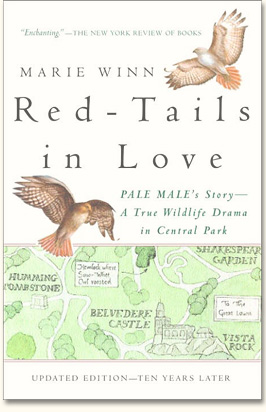
Red-Tails in Love: A Wildlife Drama in Central Park, by Marie Winn

red-tails-in-love-coverThere are a number of books that tell stories about nature. They describe birds and their behavior in ways that are accurate, but sadly boring. The reader is left thinking, “I guess you had to have been there.”

This book is different. Author Marie Winn writes with a gentle charm, leaving the reader smiling and content, yet yearning for more.

Winn starts with a lengthy prologue that sets the scene. I admit that I’m not overly fond of New York City, and I’ve never been to Central Park. Yet, after reading this book, I find myself eager to go and see for myself. In particular, I’d like to explore that portion of the park known as the Ramble, where one may spot migrating warblers in the elms and oaks and feed the birds at the Azalea Pond.

(more…)

A Snake Story

lah_4808After my recent post about spiders, and how I’m struggling to tolerate them, it might come as a surprise that I (unlike my husband) am deeply fond of snakes. Phobia—and love—know no logic.

The other day I was out for a walk with one of my kids when we came across a Western Terrestrial Garter Snake in the middle of the (dirt) road. It was stretched out full length, which was all of about 18 inches, basking in the hot sun. (They grow to about three feet, so this was a youngster.)

(more…)