
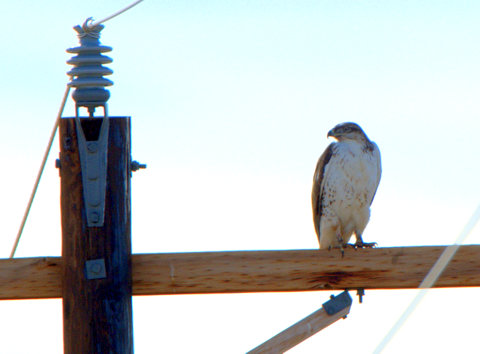
To refresh your memory, here is the photo from November’s Bird Quiz. It was taken in Colorado during the month of January. Don’t read any further if you want one last chance to identify this bird.
Category: Birds
November’s Bird Quiz
Can you identify this bird? The photo was taken in Colorado during the month of January. The answer will appear next week.

A Murder of Crows
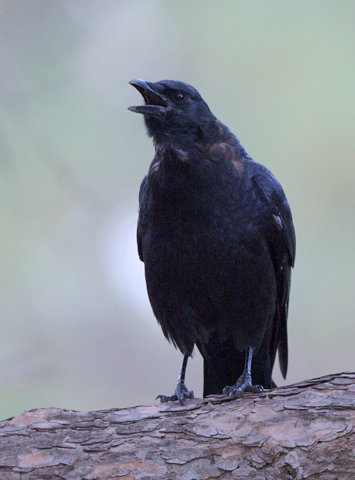 I know a lot of people don’t like crows. There’s something sort of spooky about them. Maybe that’s because they’re black, and black birds seem to encourage superstition. Why else would a flock of crows be called a “murder”? It’s true that they’re not as colorful as most songbirds, and they do make pigs of themselves at feeders, but crows are fascinating. With Halloween fast approaching, this seems an appropriate time to take another look at these very common and highly intelligent birds.
You can learn all about the taxonomy and biology of crows from a variety of websites. I recommend The Cornell Lab of Ornithology, National Geographic, and Audubon for starters. It’s interesting information, but crows are more than a list of facts—much more. They are now considered one of the smartest animals in the world! Want proof?
A Checklist of Birders
 Just as there are different kinds of birds, there are different kinds of birders. What kind of birder are you? I’m sure that as you read through my list, you’ll be able to identify with one or these—or add another “species” that I haven’t thought of. And if you think I had you in mind when I made my list, well, perhaps I did!
The Merlin
Like a raptor on the hunt, this birder makes a beeline for where the action is. They expend a tremendous amount of energy while birding, but they’re always on the bird. They aren’t easily distracted. If someone points out a bird, they’re first on the scene, and all over it.
October Quiz: Answer
To refresh your memory, here is the photo from October’s Bird Quiz. It was taken in Colorado during the month of October. Don’t read any further if you want one last chance to identify this bird.
October’s Bird Quiz
Can you identify this bird? The photo was taken in Colorado during the month of October. The answer will appear next week.

Fall Birding, Part 3
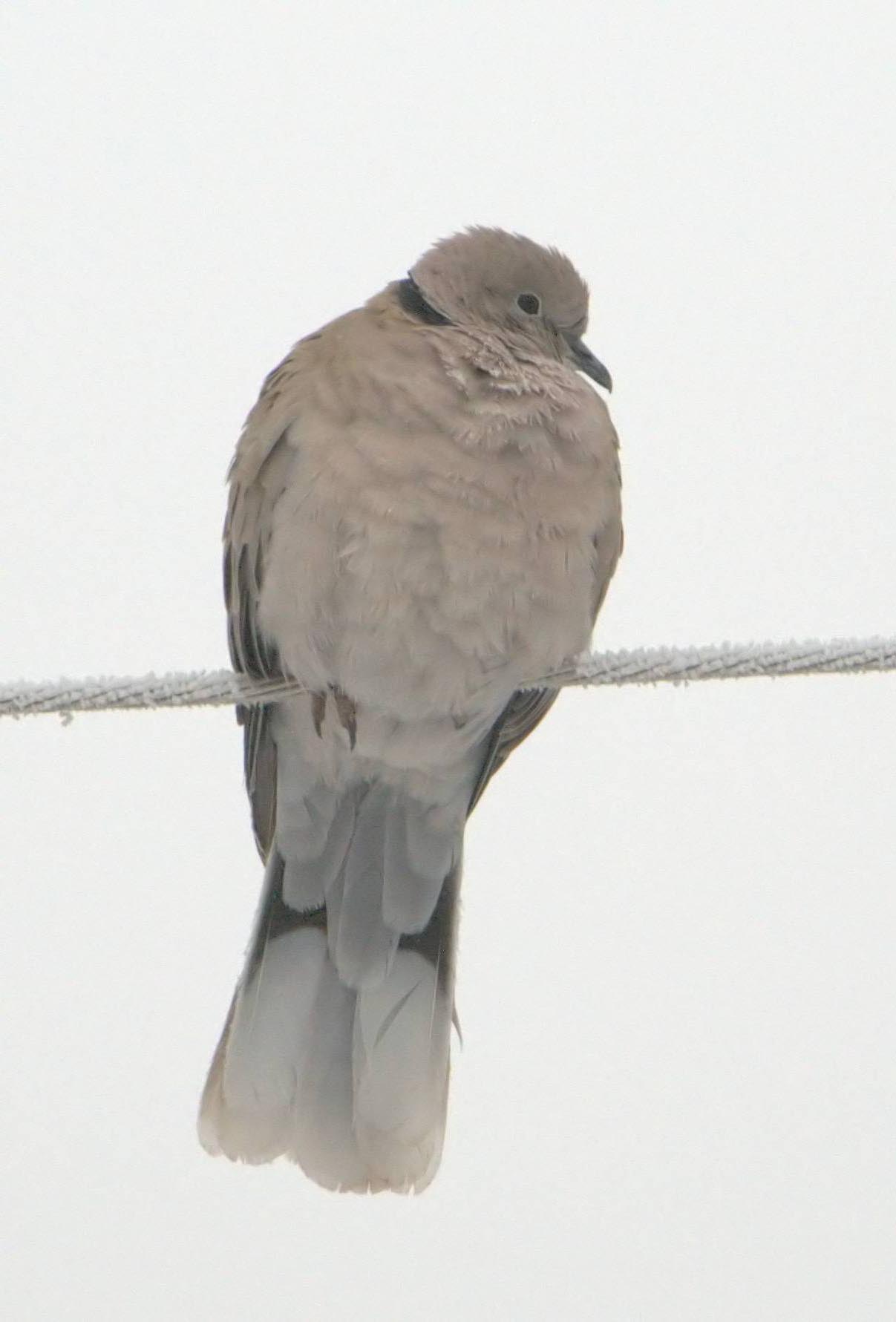 Last Chance. It sounds as if it’s a small town in the middle of nowhere, and that’s about right. Situated at the intersection of Colorado Highways 71 and 36 (the same road that goes to Boulder, some hundred miles to the west) we found several houses, a fire station, and a church, along with some abandoned buildings piled with broken furniture and other castoffs.
The big draw is a small roadside rest (complete with portable “facilities”) right next to a small pond surrounded by green shrubs and some trees. It’s a birder’s dream. Surrounded as it is by miles of dry fields, the tiny riparian area at Last Chance is a migrant trap.
Fall Birding, Part 2
(Continued from last week’s post about the Colorado Field Ornithologists’ (CFO) 2014 convention.)
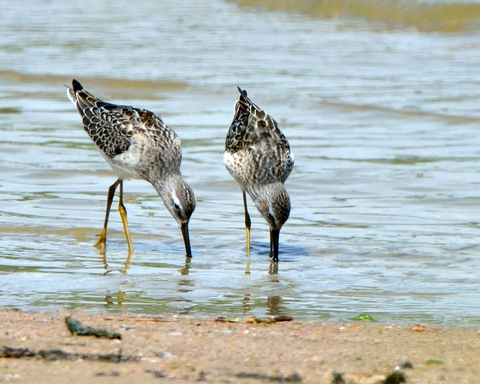 Leading up to the CFO convention, which happened over Labor Day weekend, forecasters were calling for weather in the high 90s. It was a delightful surprise to discover that their predictions were wrong. Instead of sweltering under the hot prairie sun, we enjoyed days in the low 80s, with scattered clouds (and one rapidly-moving thunderstorm). What a relief to be focused on the birds instead of the heat!
Fall Birding
 Imagine that every bird you see is brown. Little brown jobs. Big brown jobs. Streaky, plain, identical. They’re no longer in their bright (and easily identified) breeding duds. Rather, they’re playing hard to see—and hard to identify.
Now imagine that they’re all far, far away—at the water’s edge on the far side of the reservoir, waaay out in the field, sitting on that distant fence rail—and if you try to sneak up for a closer look, they fly away.
And finally, imagine that an entire summer’s worth of baby birds have all left their nests and joined the crowd, sporting their juvenile plumage.
Got it? That’s the downside challenge of fall birding.
September Quiz: Answer
To refresh your memory, here is the photo from September’s Bird Quiz. It was taken in Oregon during the month of September. Don’t read any further if you want one last chance to identify this bird.


