
 Appearance
The petite, sky-blue flowers of forget-me-nots have charmed gardeners for ages. Also available in delicate pink or white, the blossoms are suspended by wiry stems above crinkled, heart-shaped leaves of forest green. The plants form a groundcover six to twelve inches high and two feet wide. Even though the species is native to Europe, it has naturalized in North America to the extent that the Forget-me-not is the state flower of Alaska.
Category: Plants
photos of plants
When Is the Last Frost?
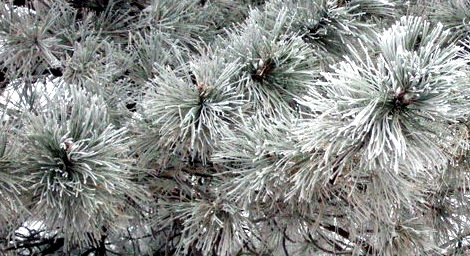
This last week of gorgeous spring weather has certainly brought out the crowds at the garden centers and home improvement stores. When I visited last weekend, carts full of geraniums, tomatoes, and other tender annuals were lined up at the checkout.
Today, the forecast is for snow. It was 30 degrees when I got up this morning. There was frost on the parked cars. As I type, big flakes are softly landing on the freshly turned soil out my window. I wondered how many of the people I’d seen at the store had gone home and planted their flowers, only to find them blackened after the sub-freezing night.
Wind

I know that wind is merely “air in motion,” but why does it have to be in such a hurry?
Here in Colorado, the wind has been blowing for weeks now—and not just gentle breezes, but howling gales that topple trees and suck every drop of moisture from already desiccated soil. First a dry winter, now this ceaseless wind.
As a gardener, there are times when I’m totally frustrated by too much wind. It stunts the growth of tender new shoots (I’m not trying to create bonsai tomatoes, but sometimes that’s what I get) and makes working in the garden a miserable experience.
Planting Done Right: Part 2
Trees
 Today is Arbor Day, the traditional day for planting trees. Most of us treasure trees. Planting one is an act of faith, something we do for our children, and perhaps our grandchildren. Sadly, thousands of our nation’s trees now reaching maturity are destined to an early death. They were doomed the day they were planted.
Gardening practices have changed over the years. The days of digging a huge hole for a new tree are over. Research has shown that planting a tree too deeply is a sure recipe for trouble.
Planting Done Right: Part 1
Shrubs, Perennials and Ornamental Grasses
 It’s spring. I’ve been digging in the garden—at least between snow storms. My back muscles (and knees and shoulders) ache, there’s dirt under my broken fingernails, and a huge smile on my face. In fact, there’s dirt in my teeth—I’ve been pulling weeds and shaking the soil off their roots before piling them into the compost bucket, and I keep forgetting to close my lips.
One of the joys of spring is adding new plants to our garden. What gardener can resist the dazzling displays at the garden center? Forgetting about budgets and the size of our yards, we load up the cart. Then we get home and the work begins. It’s time to start digging holes.
Crown of Thorns
 Tomorrow is Good Friday, the day Jesus wore a crown of thorns. In visualizing that painful headpiece, it helps me to think about the sharp spikes on the plant with the same name.
As the scientific name indicates, Euphorbia Milii is first cousin to other Euphorbias, including poinsettias, the wide variety of spurges, and Snow on the Mountain. All these species share common characteristics such as inconspicuous flowers surrounded by showy bracts, and a toxic, thick, milky sap. This latex can not only cause skin irritation, but if it comes in contact with a mucous membrane, extremely painful inflammation can result. Some species’ sap is even carcinogenic.
Annuals You Can Plant Now
Warmer days flirt with gardeners anxious to get outside and plant something, anything. But the harsh reality of cold nights, coupled with the persistent chance of frost—or even more snow—intrudes on our dreams of summer. It’s far too soon to be trusting Mother Nature with frost tender petunias, geraniums, or marigolds, but there are some annuals that can handle a bit of cold. Don’t expect them to survive wintry extremes, but they should still be alive and flourishing after lows in the 20s.
Pansies
 Annual members of the violet family, pansies are much hardier than they look. Hot and sunny summer days will fry them to a crisp, so now is the time to enjoy them. Pansies prefer enriched soil, and will do fine in full sun or light shade, as long as the weather stays cool. They are slow to start from seed, so buy transplants. Their small size makes them perfect for edging, or group them in containers where they won’t be overlooked. With colors ranging from deep purple and burgundy to pastel pinks, soft peach, and cheerful yellow and white, you can find just the right cultivar to fit any landscape scheme.
New Advice on Soil Amendments
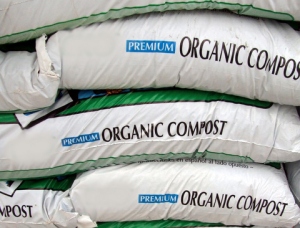 You’re gotten your test results back from the soil lab, telling you to add some organic matter. What’s the best thing to add?
In the past, I’d just bop on down to the local garden center and load up a few bags of… something. Soil amendment, composted manure, planting mix, potting mix, top soil, compost… there are hundreds of products, and the names are pretty random.
So are the ingredients. Since there are no legal standards, these bags can contain whatever the manufacturer wants them to. There’s no labeling law, either. If there’s a label at all, often you’ll see something like, “Contains (peat, forest products compost, and/or compost), wetting agent, fertilizer.” You have no idea if this particular bag has peat or compost, much less what went into that compost. And what’s a forest product? Bark? Sawdust? Squirrels?
Take the Test!
The sun is shining, the lawn is turning green, and the birds are chirping. In fact, it’s a balmy spring day. Surely there must be something you can do to start your veggie garden! As a matter of fact, there is, but it doesn’t involve a single seed.
If you’re like most gardeners, you’ve never had your soil tested. Every year you dutifully spread a layer of compost and/or manure over your garden, dig it in, and plant. After all, that’s what every book, article, and website tells you to do. You might even add some fertilizer, just to be on the safe side. But if you’ve never had a soil test, you’re flying blind.
Creative Containers
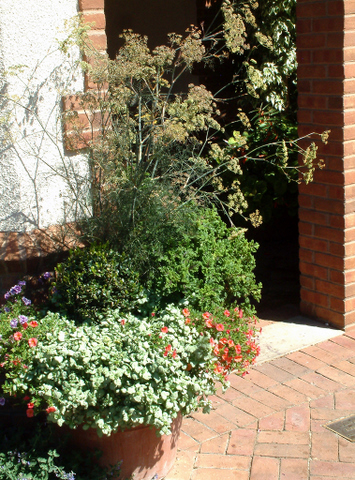 A tantalizing spell of sunny, warm weather had me out on my patio last week. It looks so bare. Most of my pots are still safely tucked into the garage for the winter. Repeated freezing and thawing can crack unglazed pottery. Since we were out of town a lot last year, I didn’t plant anything extra, not wanting to overburden our very gracious house-sitter. This year I’ll be home, and I’m already envisioning my containers.
A simple geranium in a flower pot is fine, but I have grandiose dreams. Paying particular attention to the containers at various botanic gardens has inspired me. Here are three tips on planting spectacular pots.
 Mountain Plover