

As I was learning to garden, I repeatedly heard the “experts” telling us not to water in the middle of the day. The prevailing wisdom was that any water droplets on the foliate would act as little magnifying glasses, burning tender leaves. (Think of using a magnifying glass to start a campfire, and you get the idea.)
Then, we all learned that this was a gardening myth. Water droplets are too close to the plant tissue for sunlight to focus on the leaf and cause any damage.
 I recently ran across an article claiming that a penny can help your tomato plants fight off blight. Apparently, the reasoning goes like this:
 Every so often I come across an article that explains something so much better than I ever could. This is one of those times.
 There has been a sudden flurry of articles and ads all promoting molasses as a valuable garden fertilizer/weed killer/pesticide. I find the latter use particularly humorous. Molasses is sweet. Won’t that attract critters? I bet our resident bunnies would adore molasses-coated shrubs.
 Are you stressed? You should grow houseplants! Just ask all the experts. Try an online search and you’ll come up with almost two million sites claiming that growing plants reduces stress. Even the National Institute of Health has jumped on the bandwagon with a
  It’s a common question. You’ve just planted a new tree. In the process, the plant has lost a significant portion of its roots—sometimes up to 95 per cent! Should you prune back the crown to compensate?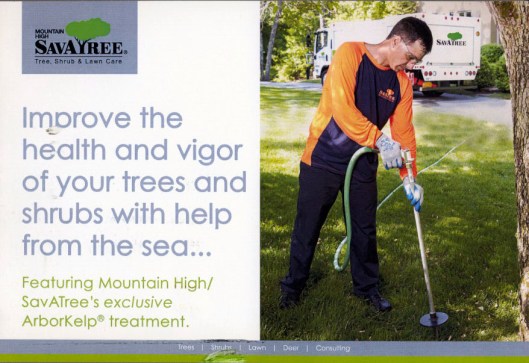
 I’ve been down with a nasty stomach virus for the past week, more interested in the distance to the bathroom than in gardening. As a result, I’ve been perusing articles instead of writing them (it takes far less effort!). I’ve also spent considerable time reading bogus gardening advice on Pintrest—it’s an amazingly rich repository of horticultural mythology. One afternoon I focused on the idea that houseplants purify the air in our homes. We’ve all seen the articles…
 Should you top a tree to keep it within bounds?
 Mountain Plover