Bird Photography: Balance & Color

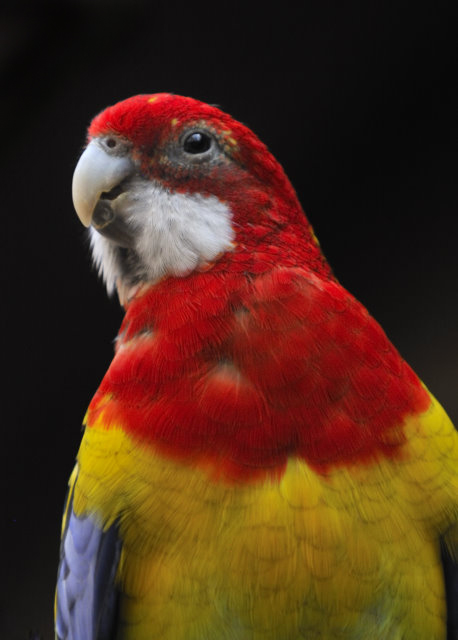
Eastern Rosella Parrot_CheyenneMtnZoo-CO_LAH_4110As I mentioned last month, if we want our photography to look like art, we need to study art. I find that the more I learn about composition and design, the better my pictures turn out. Here are a few more things to consider when looking through your viewfinder.

Balance
Objects in a photograph have visual weight to them. Imagine that your photo is a seesaw, supported by a point in the middle. For example, a large, black crow to the right of the picture will tend to pull that side downward unless balanced by something else on the left side. Just as with actual weights, two or three smaller objects can balance one big one. Most pleasing pictures are visually balanced. Remember that a large open space can also have weight, so you don’t need clutter your composition. (more…)

A Garden for Good Bugs

Monarch Butterfly_ChicoBasinRanch-CO_LAH_8874Why would I want to invite insects into my garden? Don’t most homeowners want to get rid of the bugs? It’s true that some insects cause major problems in a landscape, chewing indiscriminately and leaving behind a trail of devastation. But don’t let a few bad guys ruin it for everyone—there are plenty of insects who can live harmoniously among our plants. Some, such as bees, more than earn their keep. And who doesn’t enjoy a garden full of butterflies?

(more…)

Going Ode-ing

Amphiagrion abbreviatum_Western Red Damsel_ChicoBasinRanch-CO_LAH_3930-001The sun was beating down as we pushed through waist high weeds—reeds, grasses, and wild licorice with its Velcro stickers. I gulped another mouthful of warm water from my nearly empty bottle and swatted at a pesky deer fly as it flew off with a chunk of my arm.

Why would I choose such an inhospitable place to go for a walk? In a word—Odes. Odes is short for Odonata, the biological order containing dragonflies and damselflies.

(more…)

Pretty Spiders

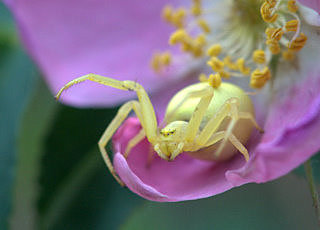
Crab Spider on Rosa woodsii_EmeraldValley-COLAH_3780If you’ve read my blog for very long, you might have gathered that I’m not exactly wild about spiders.

Realizing that this is a significant flaw in someone who loves nature and gardening, and who spends a lot of time outdoors, I’ve been attempting to overcome my aversion. I am making an effort to educate myself about arachnids. I photograph spiders wherever I see them. I’ve even held “Rosie,” the Chilean Rose Hair Tarantula at the Butterfly Pavilion in Broomfield (see proof).

(more…)

Bird Photography: Basic Composition

Secretarybird_DenverZoo_LAH_1564 As I’ve mentioned before, there are lots of reasons to photograph birds. Perhaps you just want a record of what you’ve seen, or proof of a rarity to convince those eBird auditors. Maybe you can’t ID the bird at the moment, and you want to give it another shot once you get home. In cases like these, it doesn’t really matter how pleasing your photograph is as a work of art.

But maybe, like me, you don’t just want a snapshot of the bird—you want a good photo. You’re paying attention to the lighting and the background, and to what the bird is doing. You’re hoping to create a work of art. In that case, it helps to think like an artist.

(more…)

Sweet, Sweet Honeysuckles

I sat me down to watch upon a bank
With ivy canopied and interwove
With flaunting honeysuckle. (John Milton)

Lonicera sempervirens_Honeysuckle_DBG_LAH_6903Mention honeysuckle, and we think of green hedgerows, sultry summer days, and childhoods spent picking the flowers and putting them in our mouths to suck out the sweet nectar. There are around 180 species in the genus Lonicera. Fast growing and tolerant of inhospitable conditions, honeysuckles have much to recommend them. Many are valuable landscape plants able to withstand Colorado’s challenging conditions while presenting us with beautiful flowers and berries adored by birds.

(more…)