
 From the big questions (how many species of birds are there?) to specifics (should the Bullock’s Oriole and the Baltimore Oriole be merged into one species called the Northern Oriole?), birders have long endured a bit of confusion. It seems even the most eminent ornithologists disagree on these and similar conundrums.
In 1946, a paper published by Ernst Mayr asserted that there were 8,616 species of bird worldwide. Today, the consensus is that there are closer to 10,000 although estimates vary widely. What happened?
In 1973, scientists decided that the two most common American orioles, the Bullock’s Oriole in the west and the Baltimore Oriole in the east, were really the same bird. Where their ranges overlapped, they mated and produced fertile young. Then, in 1995, the two species were separated again! Why?
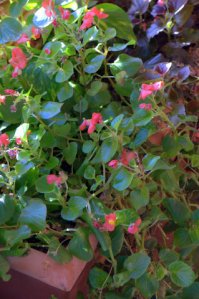 What plant thrives indoors, shrugs off low humidity, and blooms all winter in bold shades of white to pink to red? Surprise! It’s wax begonias!
 If you are a serious birder, you probably keep a life list. As any collector understands, adding birds to that list brings a sense of elation, accomplishment and satisfaction. However, if you’ve been birding the same place for very many years, you probably have already seen most of the birds in your area.
 It was a brisk fall day. A friend and I were hidden among the cattails, binoculars in hand, field guide open between us. We were both new at birding. The wide assortment of ducks bobbing out on the reservoir, nondescript in their eclipse plumage, was giving us fits. That’s why we had come–to learn how to identify fall ducks.
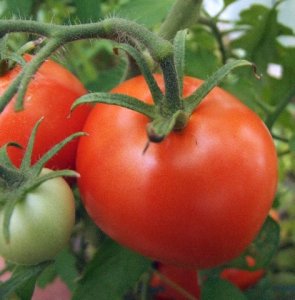 When can I pick my tomatoes? Will these melons ripen in my short growing season? If I plant these flowers from seed, when will I have blooms?
 Even before I was a birder, I could identify the male Red-winged Blackbird. Found in shallow marshes and other wetlands around the country, the black bird with the red and yellow shoulders is a familiar sight. Even the little drainage pond at the end of our street, with its sparse patch of cattails, is home to a few of these noisy blackbirds.
  With giant, trumpet-shaped flowers facing outward around a central stalk, a blooming amaryllis makes an eye-catching houseplant. Colors range from white through pink to red (and even almost black), as well as salmon-orange. Stripes or contracting edges are common. “African” amaryllis have more compact forms suited to indoor cultivation. Dwarf amaryllis are smaller in size but can produce more blooms.
 Have you finished your Christmas shopping yet? Christmas is only two days away! Well, if you’re still scratching your head searching for ideas, I have just the thing for that hard-to-shop-for person on your list. And if you are done with your shopping, may I add one more person for you to shop for—someone you don’t know and will probably never meet?
 Mountain Plover