
 The seasons have changed. The grosbeaks, hummingbirds, and other birds of summer have left for more tropical climates, but they’ve been replaced. Ducks, loons and grebes that spent the summer in the far north are showing up on local ponds. Rough-legged Hawks sit where Swainson’s hung out a month or two ago. Sandhill Cranes are headed for their winter feeding grounds in New Mexico. Instead of Chipping Sparrows at my millet feeders, I have flocks of Juncos.
Since the actual number of birds doesn’t really seem to change that much, I often wonder why birds bother to migrate at all. If Juncos can survive the winter here, why not Chipping Sparrows? (more…)
 I recently posted my
  Just the title evokes images of a Japanese horror movie with giant beetles running down the streets of Tokyo, grabbing screaming people and crunching them between its mandibles.
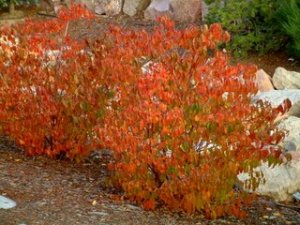 You’ve never noticed the shrub before. Its rounded green leaves and vase shape let it lurk unobtrusively in the background, where it may eventually grow to 15 feet tall and wide. Then, seemingly overnight, there’s a neon-fuchsia beacon glowing in the landscape. Fall has arrived, and the Burning Bush is on fire.
 Gardening in Colorado is not easy. Late freezes, early snow storms (though not this year), hail, drought, torrential rainfall, over 100 species of grasshoppers… there is plenty to complain about.
 My houseplants had been looking fine all summer, but now they were obviously ailing. No leaves were drooping, no obvious critters were chomping on the leaves. It was more of a general sense of decline—and a dappled, grayish pallor to the foliage.
 What comes to mind when I describe a tree that has heart-shaped leaves, is in the poplar genus, grows well in Colorado and turns a brilliant gold in the fall? Chances are, you didn’t immediately think of cottonwoods. Yet, when it comes to putting on a show, cottonwoods are every bit as spectacular as their close kin, the aspen. In many ways, they are the other iconic Colorado tree. Find any stream, pond, or irrigation ditch, and chances are there will be at least one cottonwood growing next to it. They are riparian trees, and prefer to have their feet wet.
 The tiny bird fluffs its feathers against the cold, while the north wind whips sleet into the pine branches surrounding its perch. With all water sources frozen, it has to use precious body warmth to melt the snow it eats. Last year’s crop of seeds is buried under a layer of white. Wild birds are amazingly hardy creatures, but even the sturdiest Mountain Chickadee (above) finds conditions like these a challenge.
 Mountain Plover