 I just added bird #19 to my yard list. That may not sound like very many, but we only moved into our new house in May, and we had no landscaping until August. Birds are rarely attracted to bare dirt!
Not surprisingly, #19 was a Dark-eyed Junco. Vertical migrants, Juncos spend the summer up in the mountains, nesting in the conifers, and descend to lower elevations for the winter. At 7,100 feet , our house barely qualifies as a lower elevation; the park up the road, a mere 200 feet higher, hosts juncos all year.
(more…)

 Have you ever been on a snipe hunt? These nocturnal adventures are a classic part of summer camp. After explaining that a snipe is a small, furry creature, your counselor hands you and your cabin mates each a pillowcase and a flashlight. Then you’re turned loose in the dark and spooky woods (illustrated at right) to practice your “snipe call.” At various times, your counselor may ask, “Did you hear that?” or “I just got a glimpse—it went that way!” Of course, this sort of snipe is a mythical beast, and you are the butt of a practical joke that the counselors will find hilarious.
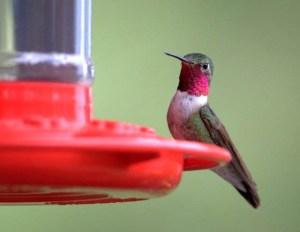 On a trip to Washington this past February, it seemed strange to see (Anna’s) hummingbirds coming to the feeders. Here in Colorado, we aren’t so lucky. The species we enjoy here depart in the fall and don’t return until the end of April—or even later. Still, I’ll be brewing up some sugar water soon. I typically hang my feeders around April 25, just in case some early arrivals show up in the backyard. (When temperatures dip below freezing, I take the feeders in for the night, then warm them a bit for the birds’ breakfast.)
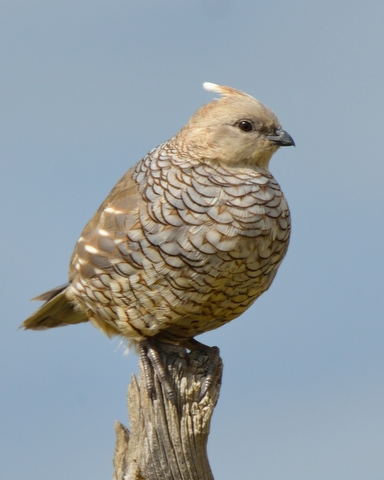

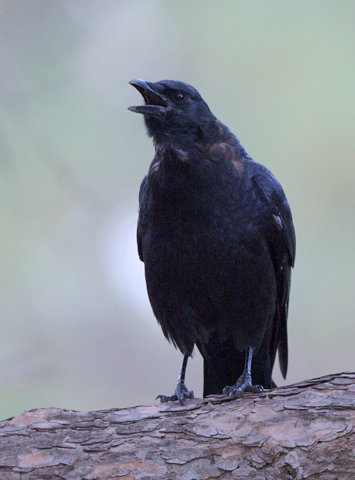


 Mountain Plover