
 Every so often I come across an article that explains something so much better than I ever could. This is one of those times.
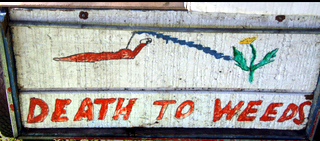
Tsu Dho Nimh writes a blog called Lazy Gardening SMACKDOWN. Back in 2013, he tackled the viral advice about making your own herbicide out of vinegar, detergent, and some other ingredients. I’ve been meaning to cover this topic, because this homemade “herbicide” doesn’t work. But then I saw Nimh’s article, and realized that he did a much more thorough job of explaining it all.
 There has been a sudden flurry of articles and ads all promoting molasses as a valuable garden fertilizer/weed killer/pesticide. I find the latter use particularly humorous. Molasses is sweet. Won’t that attract critters? I bet our resident bunnies would adore molasses-coated shrubs.
 Are you stressed? You should grow houseplants! Just ask all the experts. Try an online search and you’ll come up with almost two million sites claiming that growing plants reduces stress. Even the National Institute of Health has jumped on the bandwagon with a
  Every gardener knows that ladybugs are “good” bugs because they eat “bad” bugs. Educated gardeners know that ladybugs are actually beetles, and that they eat aphids, scale insects, immature beetles and true bugs, and mites. The adults are efficient predators; the larvae are even more voracious. No wonder we want lady beetles in our gardens!
 It’s a common question. You’ve just planted a new tree. In the process, the plant has lost a significant portion of its roots—sometimes up to 95 per cent! Should you prune back the crown to compensate?
 I’ve been down with a nasty stomach virus for the past week, more interested in the distance to the bathroom than in gardening. As a result, I’ve been perusing articles instead of writing them (it takes far less effort!). I’ve also spent considerable time reading bogus gardening advice on Pintrest—it’s an amazingly rich repository of horticultural mythology. One afternoon I focused on the idea that houseplants purify the air in our homes. We’ve all seen the articles…
 Should you top a tree to keep it within bounds?
 Type “baking soda garden” into your web browser and you get over a million hits. Not surprisingly, most are something along the lines of “17 Smart Baking Soda Tips,” and “7 Natural Uses for Baking Soda.” Depending on which list you read, it sweetens tomatoes, increases the blooms on geraniums, begonias, and hydrangeas, prevents black spot on roses, cures powdery mildew, discourages soil gnats, and kills slugs and other harmful insects “
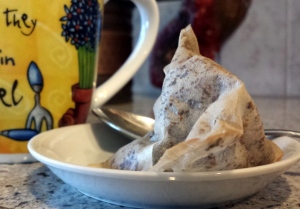 It seems such a waste—we use a tea bag to make a lovely cup of tea, and then toss it into the trash. It just screams to be repurposed—surely there’s some way to get some extra use from that depleted bag! So it’s no big surprise that the internet is suddenly full of lists with titles such as “7 Random Uses for Used Tea Bags.”
 Mountain Plover