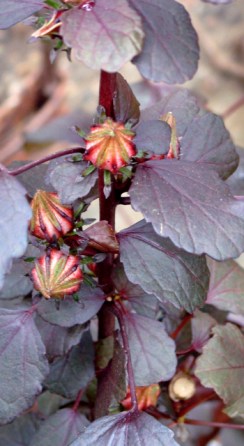
 I’m really not a fussy eater. While I draw the line at some animal parts (Rocky Mountain oysters, anyone?) and various invertebrates (no deep-fried scorpions in my diet!), I’m not nearly as fussy about dining on plants. Of course, I think some plants taste better than others—I’m a big fan of broccoli, artichokes, and papayas, for example, while I tend to avoid cucumbers and those bitter Italian greens—but for the most part, if it’s prepared well, I’ll eat it.
Except.
I don’t do okra. I’ve had okra (also known as lady’s fingers or gumbo) in soups, stewed, curried, stir-fried, roasted, deep fried, and in various other random recipes that my friends—skilled in the culinary arts—assured me I’d love. All I can say is, they were wrong. I admit, I like the flavor. No problem there. But the slime gets me every time.
(more…)


 Corn pudding and hush puppies, cornbread stuffing and succotash. If anything qualifies as authentic American cooking, it surely involves corn. We eat it fresh—still on the cob, creamed, and as the critical ingredient in corn chowder. We eat it dried and ground into cornmeal—in corn pone and muffins, as fritters and johnnycake. Domesticated for millennia, corn has come a long way from its teosinte roots.
 Are you a gardener, or interested in gardening? How about going deeper and delving into a bit of botany? Do you like to cook? I find great satisfaction in planting a seed, nurturing the crop to harvest, then discovering the tastiest way to prepare the results. Plus, I want to understand the plant I’m eating. That’s why I was so excited to discover a new-to-me blog,
 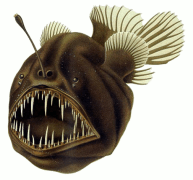 When I think of parasites, I typically think of creatures such as tapeworms, fleas, ticks, and leeches—nasty invertebrates that drain the life out of us humans. Then, I might recall that some higher animals can also be parasites, such as the deep sea anglerfish. You’ve likely seen pictures of anglerfish, with their huge, pointy teeth in a large head, followed by a tapering body. When these fish mate, the male permanently attaches itself to the female and lives off her bloodstream for the rest of his life, his sperm his only contribution. (See National Geographic’s
 Mountain Plover