
 It’s Valentine’s Day, one of the busiest days of the year for your friendly neighborhood florist. My husband knows I like receiving flowers on this most romantic of holidays. He also knows that I appreciate getting a plant that is still alive and growing, as opposed to cut flowers that will soon wilt and be composted.
One popular Valentine plant is the Florist’s Cyclamen. These cyclamen are decidedly beautiful—delicate and romantic—but are difficult plants to keep indoors.


 How would you like a houseplant that isn’t fussy about food, water, light, or much of anything else, is ignored by pests, and looks good year round? If that seems too good to be true, then you haven’t met the Ponytail Palm. Granted, I have yet to see flowers, but with all its good points, who cares about flowers?
 Everywhere we turn, we see red. Poinsettias decorate our homes, churches, businesses and stores. How did a tropical plant become such a pervasive symbol of Christmas? Are poinsettias poisonous? And what should I do with my plants once the holidays are over?
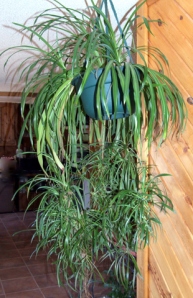 Halloween is just around the corner. Spider decorations are everywhere. I don’t like spiders much (rather, I’m terrified of them), but even arachnophobes like me aren’t afraid of spider plants. There are no chitinous appendages, poison glands, and no skittering noises. Instead, they just grow like crazy and produce lots of offshoots.
 Last night WeatherBug was blinking a frost alert—the first of the season—and sure enough, there was ice on our birdbath this morning. I hate to admit it, but summer is over. I don’t mind the end of the cucumbers; they were overly prolific this year. And the carrots are safe underground for months to come. What I miss are the fresh herbs that we’re still enjoying. So, they’re moving back in with us.
 Tomorrow is Good Friday, the day Jesus wore a crown of thorns. In visualizing that painful headpiece, it helps me to think about the sharp spikes on the plant with the same name.
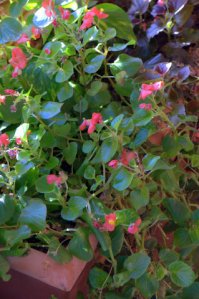 What plant thrives indoors, shrugs off low humidity, and blooms all winter in bold shades of white to pink to red? Surprise! It’s wax begonias!
 With giant, trumpet-shaped flowers facing outward around a central stalk, a blooming amaryllis makes an eye-catching houseplant. Colors range from white through pink to red (and even almost black), as well as salmon-orange. Stripes or contracting edges are common. “African” amaryllis have more compact forms suited to indoor cultivation. Dwarf amaryllis are smaller in size but can produce more blooms.
 Mountain Plover